






What's Happening?
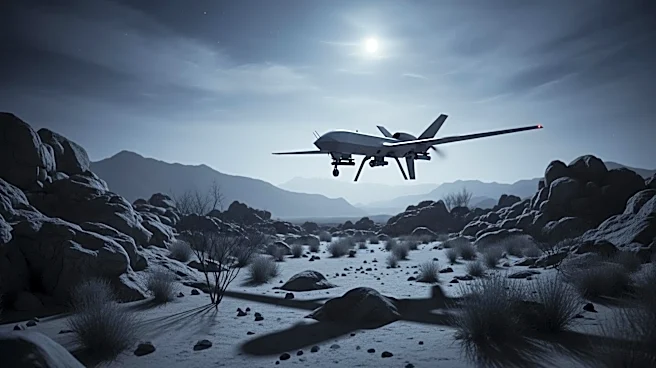
A joint military operation by U.S. and Nigerian forces has successfully killed Abu Bakr al-Mainuki, a high-ranking leader of the Islamic State West Africa Province (ISWAP), in the Lake Chad Basin. This operation is part of a recently formed partnership
between the U.S. and Nigeria, aimed at combating terrorism in the region. Al-Mainuki, born in Nigeria's Borno province, was a key figure in ISWAP's operations, overseeing media, finances, and weapons development. His death is considered a significant achievement in the fight against militant groups in West Africa.
Why It's Important?
The death of Al-Mainuki is a critical development in the ongoing battle against ISWAP and other militant groups in Nigeria. It demonstrates the effectiveness of international military cooperation and intelligence-sharing in counterterrorism efforts. This operation could disrupt ISWAP's activities, affecting its recruitment, financing, and planning capabilities. The success of this mission may also bolster the U.S.-Nigeria military partnership, potentially leading to more collaborative efforts to address security challenges in the region. Additionally, it highlights the strategic importance of Nigeria in global counterterrorism initiatives.
What's Next?
The operation's success may lead to increased military collaboration between the U.S. and Nigeria, focusing on dismantling remaining militant networks. The Nigerian government might also intensify efforts to address the root causes of militancy, such as economic disparity and lack of education. The international community will likely monitor the situation closely to assess the impact on regional security. Further operations could be planned to target other high-ranking militants, aiming to destabilize ISWAP and similar groups. The success of this mission could also lead to a reevaluation of military strategies in other regions facing similar threats.