









What's Happening?
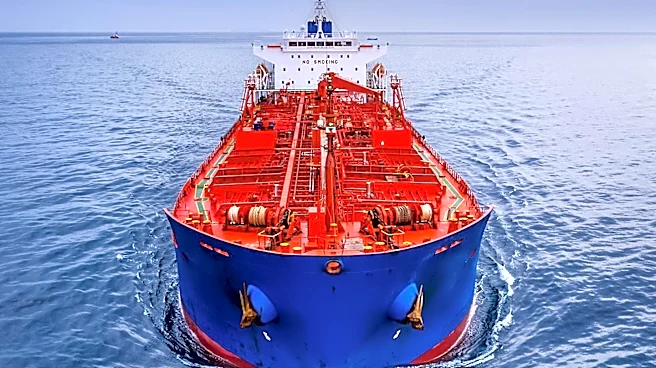
Oil prices have surged following a series of attacks on tankers near the Strait of Hormuz, a critical chokepoint for global oil shipments. The attacks, attributed to Iran, have led to President Trump declaring the ceasefire with Iran as over. This development
has caused Brent crude, the global oil benchmark, to rise by nearly 6% to over $80 a barrel, marking the highest price since the ceasefire was initially agreed upon. The attacks have halted tanker traffic through the strait, which is vital for the transportation of about 20 million barrels of oil per day from Gulf producers. The disruption has also led to increased gas market prices in Europe, with the Dutch and UK contracts seeing significant rises.
Why It's Important?
The escalation in tensions between the U.S. and Iran and the resulting disruption in oil supply routes have significant implications for global energy markets. The rise in oil prices could lead to increased costs for consumers, particularly in the form of higher gasoline and energy prices. This situation also poses a risk to the global economy, as higher energy costs can contribute to inflationary pressures. The disruption in the Strait of Hormuz, a key artery for oil transportation, underscores the vulnerability of global energy supplies to geopolitical conflicts. The situation also highlights the potential for further instability in the Middle East, which could have broader implications for international relations and economic stability.
What's Next?
The immediate future will likely involve diplomatic efforts to de-escalate tensions and restore stability to the region. The U.S. and Iran may engage in negotiations to find a diplomatic solution, although the outcome remains uncertain. In the meantime, oil markets will continue to react to developments in the region, with potential for further price volatility. Energy companies and governments will need to assess alternative supply routes and strategies to mitigate the impact of the disruption. The situation also calls for increased attention to energy security and the diversification of energy sources to reduce reliance on vulnerable supply routes.