
What's Happening?
Japan has scrambled fighter jets in response to joint air patrols conducted by Russian and Chinese military forces near its territory. The Japanese Defense Ministry reported that two Russian Tu-95 nuclear-capable
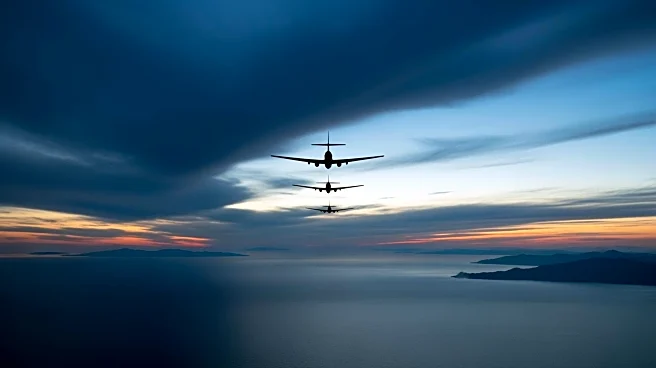
bombers flew from the Sea of Japan to the East China Sea, where they joined two Chinese H-6 bombers for a long-distance joint flight in the Pacific. Additionally, four Chinese J-16 fighter jets accompanied the bombers on a round-trip flight between Japan's Okinawa and Miyako islands. The Miyako Strait, located between these islands, is classified as international waters. Japan also detected simultaneous Russian air force activity in the Sea of Japan, involving an early-warning aircraft and two fighter jets. Japanese Defense Minister Shinjiro Koizumi expressed concern over these operations, describing them as a show of force against Japan. The joint flight lasted for eight hours, according to Russian news agencies.
Why It's Important?
The joint military operations by Russia and China near Japan underscore the escalating tensions in the region. Japan's response, including scrambling fighter jets, highlights the seriousness with which it views these maneuvers. The actions are perceived as a direct challenge to Japan's national security, especially in light of recent comments by Japanese Prime Minister Sanae Takaichi regarding potential responses to Chinese military actions against Taiwan that could threaten Japan. The increased military cooperation between China and Russia, including joint exercises and anti-missile training, signals a strengthening alliance that could impact regional security dynamics. This development is significant for U.S. interests, as it may influence military strategies and alliances in the Pacific, potentially affecting U.S. military presence and operations in the area.
What's Next?
Japan is likely to continue monitoring the activities of Russian and Chinese forces closely, maintaining readiness to respond to any perceived threats. The situation may prompt Japan to strengthen its defense capabilities and seek further support from allies, including the United States. Diplomatic efforts to address the tensions could be pursued, although the current geopolitical climate suggests that military posturing may continue. The international community will be watching closely for any further developments, as the actions of China and Russia could have broader implications for regional stability and security.
Beyond the Headlines
The joint patrols by Russia and China near Japan may have deeper implications for international relations and military alliances. The collaboration between these two nations could be seen as a strategic move to counterbalance U.S. influence in the region. This could lead to shifts in military strategies and alliances, with countries like Japan and South Korea potentially seeking closer ties with the U.S. to counteract the growing military presence of China and Russia. Additionally, the situation raises questions about the future of Taiwan, as increased military activities in the region could impact its security and international support.