






What's Happening?
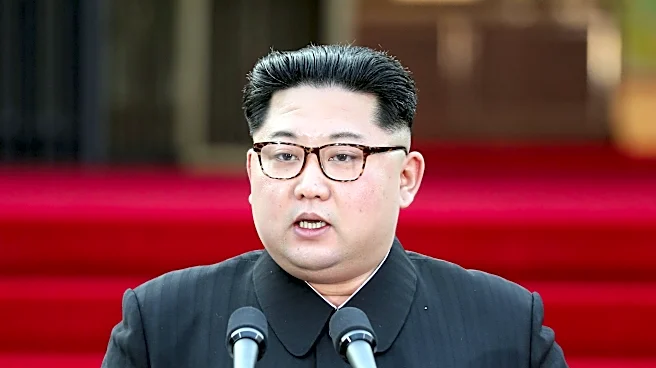
South Korea and the United Nations are actively discussing the persistent nuclear threat from North Korea and the emerging security challenges posed by artificial intelligence (AI) in military applications. These discussions took place during the 25th
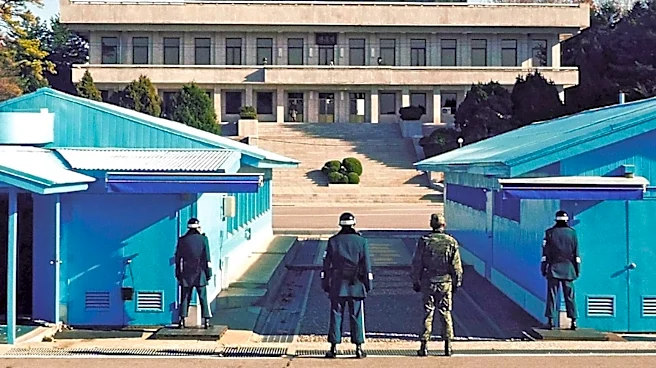
Korea-UN Disarmament and Non-Proliferation Conference, co-hosted by South Korea's Foreign Ministry and the UN Office for Disarmament Affairs (UNODA). Vice Minister for Strategy and Intelligence Jeong Yeondoo met with UN Under-Secretary-General and High Representative for Disarmament Affairs Izumi Nakamitsu to exchange views on the Korean Peninsula, North Korea's nuclear program, and broader arms-control concerns. The conference examined AI's implications for nuclear, biological, and chemical weapons, cybersecurity, conventional weapons, and wider disarmament efforts, emphasizing the need for international rules and human oversight amid growing fears of miscalculation.
Why It's Important?
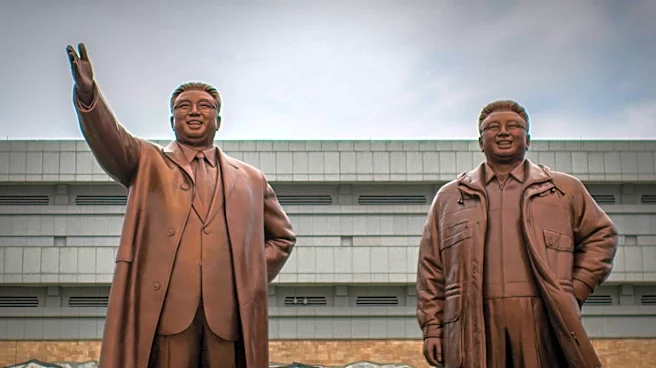
The discussions between South Korea and the UN are crucial because they address two of the most significant and evolving threats to global security: nuclear proliferation and the weaponization of AI. North Korea's continued development of nuclear weapons and ballistic missiles poses a direct threat to regional stability and the international non-proliferation regime. Simultaneously, the rapid integration of AI into military operations introduces new risks, including the potential for autonomous weapons systems, increased speed of decision-making that could lead to unintended escalation, and challenges to human control over the use of force. Establishing international norms and regulations for military AI is vital to prevent an arms race and ensure ethical deployment. The collaboration between South Korea and the UN highlights the urgency of these issues and the need for a coordinated international response to manage these complex threats.
What's Next?
The ongoing dialogue between South Korea and the UN is expected to continue, focusing on developing shared principles for responsible military AI and strengthening the global disarmament and non-proliferation framework. Future steps will likely involve further international conferences, expert group meetings, and diplomatic initiatives aimed at forging consensus on AI governance in military contexts. Efforts will also continue to address North Korea's nuclear program through diplomatic pressure, sanctions, and multilateral negotiations, though progress remains challenging. The UN Office for Disarmament Affairs will likely advocate for the prohibition of lethal autonomous weapons to maintain human control over the use of force. Governments, international organizations, industry, and academia are urged to collaborate on these complex issues to mitigate risks and ensure global security.
Beyond the Headlines
The convergence of nuclear threats and advanced AI technology presents profound ethical, legal, and strategic dilemmas. The development of AI-powered weapons systems raises fundamental questions about accountability in warfare, the potential for algorithmic bias in targeting, and the very definition of human control over life-and-death decisions. Ethically, the prospect of machines making autonomous killing decisions challenges long-held principles of human dignity and moral responsibility. Legally, existing international humanitarian law may need to be reinterpreted or expanded to address the unique challenges posed by AI in warfare. Strategically, the integration of AI could fundamentally alter the nature of conflict, potentially leading to faster, more complex, and less predictable engagements. These discussions are not just about arms control but about shaping the future of warfare and ensuring that technological advancements serve humanity rather than imperil it, requiring a global philosophical and policy reckoning.