



What's Happening?
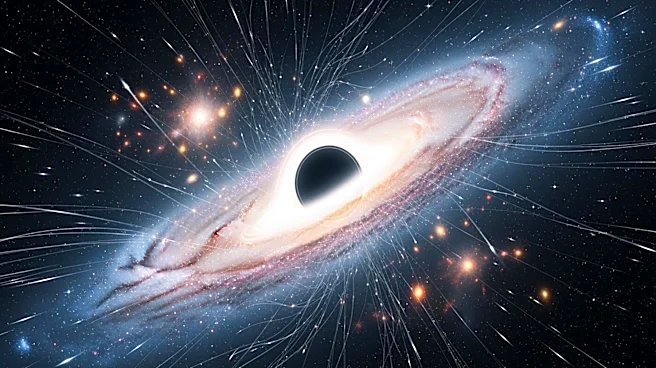
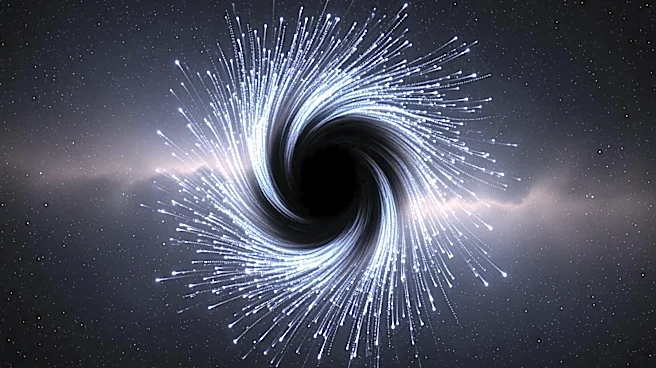
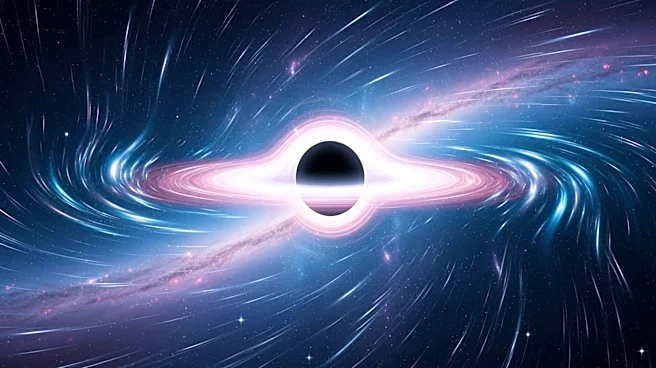
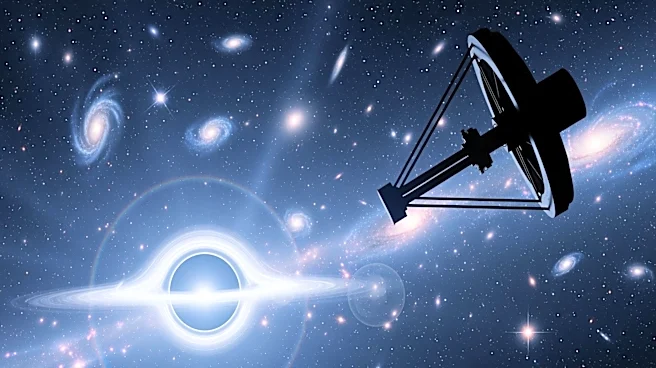
Astronomers have observed a wind blowing from the Milky Way's central black hole, Sagittarius A*, marking a significant discovery in understanding galactic dynamics. A team from Northwestern University used the Atacama Large Millimeter/Submillimeter Array
(ALMA) to detect a cone-shaped cavity in the cold gas surrounding the black hole, indicating hot material streaming outward. This finding confirms long-held theories that feeding black holes produce outflows, even in low-activity states. The discovery provides insights into the role of supermassive black holes in shaping their host galaxies over billions of years.
Why It's Important?
The detection of a wind from Sagittarius A* offers valuable insights into the behavior of supermassive black holes, which are pivotal in the evolution of galaxies. Understanding these outflows helps scientists comprehend how black holes influence star formation and the distribution of gas in galaxies. This discovery also aligns with broader patterns observed in black hole studies, suggesting that the availability of cold gas, rather than exotic physics, governs black hole growth and quiescence. The findings have implications for models of galactic evolution and the role of black holes in the universe.
What's Next?
Future research will focus on measuring the velocity of the gas being swept along the cavity walls and observing changes in the void over time. Additional data from NASA's Chandra X-ray Observatory could further confirm the presence of the wind and its characteristics. Continued observations will enhance understanding of the interactions between black holes and their environments, contributing to a more comprehensive picture of galactic dynamics.