

What's Happening?
Recent discussions have highlighted the importance of increasing soil carbon stocks through various agricultural practices on the prairies. Soil organic matter plays a crucial role in enhancing soil quality, biomass yield, and water retention. It is primarily
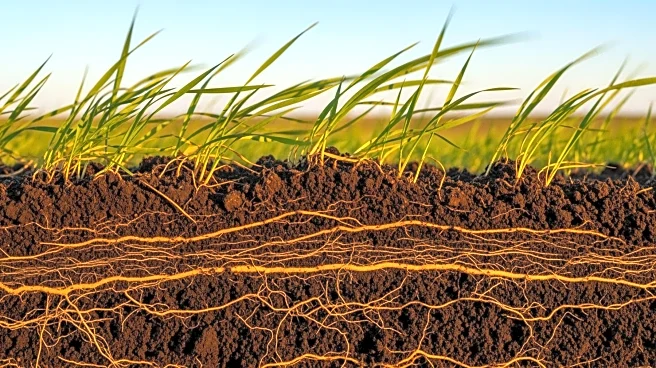
increased through methods such as above-ground material, root turnover, and rhizodeposition. Historically, wheat-fallow cropping systems significantly reduced soil carbon levels. However, the shift to continuous cropping systems with no-till practices and diverse rotations has led to improvements in soil organic matter. A 24-year study in Bow Island, Alberta, demonstrated that forage stands, when adequately fertilized, sequestered over 16% more carbon than continuously cropped treatments. This is largely due to the deep root systems of forage crops, which enhance carbon sequestration without depleting existing soil organic matter.
Why It's Important?
The enhancement of soil carbon stocks is vital for sustainable agriculture and environmental health. Increasing soil organic matter not only improves soil quality and productivity but also contributes to climate change mitigation by sequestering carbon. This is particularly significant in the context of global efforts to reduce greenhouse gas emissions. Farmers adopting these practices can benefit from improved crop yields and soil health, while also playing a role in environmental conservation. The findings from the Bow Island study underscore the potential of forage crops in carbon sequestration, offering a viable strategy for farmers to enhance soil carbon levels sustainably.
What's Next?
Farmers and agricultural stakeholders may consider integrating forage crops into their rotations to boost soil carbon sequestration. This approach could be supported by agricultural extension services providing guidance on suitable forage blends and fertilizer recommendations. As awareness of the benefits of soil carbon sequestration grows, there may be increased interest in research and development of new agricultural practices that further enhance soil health and carbon storage. Policymakers might also explore incentives for farmers adopting these sustainable practices, aligning agricultural policies with environmental goals.