



What's Happening?
Durham Wildlife Trust has embarked on a seagrass planting initiative in the rivers Aln and Don, aiming to restore habitats that have been lost due to human activity and environmental changes. The project, part of the Stronger Shores initiative, involves
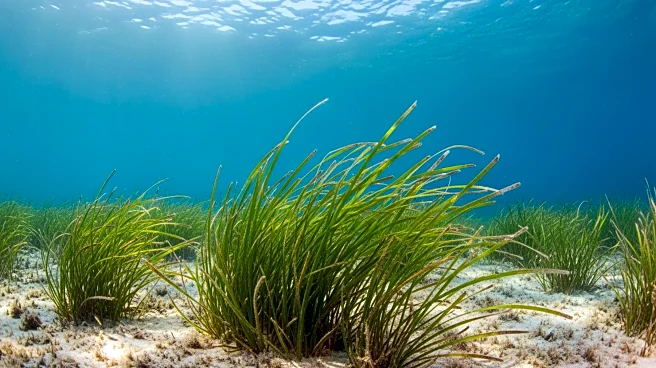
planting seagrass in custom-made frames to protect the plants and monitor environmental conditions. Dr. Martina Bristow, the trust's seagrass and seaweed research officer, reported that the plants appear healthy, which is promising for the restoration efforts. The seagrass seeds were cultivated by the Tees Rivers Trust at a specialized nursery in Hartlepool before being planted. This trial, which will continue until the end of September, seeks to determine the feasibility of re-establishing seagrass in areas where it once thrived.
Why It's Important?
Seagrass plays a crucial role in marine ecosystems by capturing carbon, providing habitat for numerous species, and improving water quality. The restoration of seagrass meadows could significantly enhance biodiversity and contribute to climate change mitigation efforts. The success of this project could serve as a model for similar conservation efforts globally, highlighting the importance of restoring natural habitats to combat environmental degradation. The initiative also underscores the potential of nature-based solutions in protecting coastlines and supporting sustainable ecosystems.
What's Next?
The project will continue with further plantings, including a scheduled planting at the Wansbeck Estuary. Researchers will monitor the health and growth of the seagrass, using environmental sensors to gather data on conditions affecting the plants. The outcomes of these trials will inform future restoration strategies and could lead to expanded efforts to restore seagrass meadows in other regions. The project’s progress will be closely watched by environmentalists and policymakers interested in sustainable coastal management.
Beyond the Headlines
The restoration of seagrass meadows not only benefits marine life but also has broader implications for coastal communities. By improving water quality and providing habitats for fish, these efforts can support local fisheries and boost eco-tourism. Additionally, the project highlights the importance of collaboration between conservation organizations and local communities in achieving environmental goals. The success of such initiatives could inspire further investment in ecological restoration projects, promoting a more sustainable interaction with natural resources.