






What's Happening?
The city of Toruń, Poland, is recognized as the birthplace of Nicolaus Copernicus in 1473. The city has since leveraged its connection to the renowned astronomer and its traditional gingerbread production as key aspects of its identity. Toruń's medieval
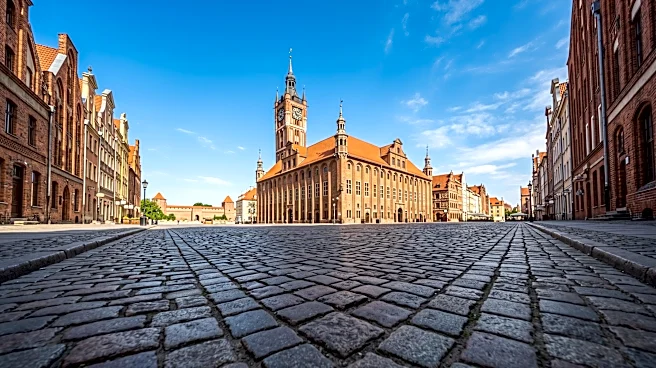
core, which largely survived World War II, was designated a UNESCO World Heritage site in 1997. This historic area features a working Rynek Staromiejski (Old Town Market Square), a 13th-century Old Town Hall, patrician houses, and surviving defensive walls along the Vistula River. The city's compact size makes it easily walkable, attracting tourists interested in its rich history and unique cultural offerings.
Why It's Important?
Toruń's successful integration of its historical significance, particularly its link to Nicolaus Copernicus, with its local culinary tradition of gingerbread, provides a model for cultural tourism and urban development. The preservation of its medieval architecture, untouched by wartime destruction, offers a rare glimpse into European urban planning and lifestyle from centuries past. This approach not only boosts local tourism and the economy but also reinforces a sense of cultural heritage and pride. For visitors, it offers an educational experience combining scientific history with tangible cultural practices, demonstrating how historical figures and local traditions can shape a city's enduring appeal and economic viability.
What's Next?
Toruń is expected to continue promoting its dual heritage of astronomy and gingerbread to attract both domestic and international tourists. Efforts will likely focus on maintaining the UNESCO World Heritage status of its Old Town, ensuring the preservation of its historical buildings and cultural practices. The city may also explore further initiatives to enhance the visitor experience, such as interactive exhibits related to Copernicus or expanded gingerbread-making workshops. Continued accessibility improvements for travelers from major Polish cities like Warsaw and Gdańsk, and potentially from the nearby Bydgoszcz airport, will be crucial for sustaining its tourism growth.
Beyond the Headlines
The story of Toruń highlights the profound and lasting impact that individuals like Nicolaus Copernicus can have on a city's identity and economy centuries after their lifetime. It also underscores the importance of cultural preservation, as the city's untouched medieval core serves as a living museum. The intertwining of scientific legacy with a local culinary tradition illustrates how diverse elements can contribute to a unique cultural brand. This blend offers a deeper understanding of how historical narratives are maintained and celebrated, fostering a connection between past achievements and contemporary life, and demonstrating the enduring value of both intellectual and artisanal heritage.