



What's Happening?
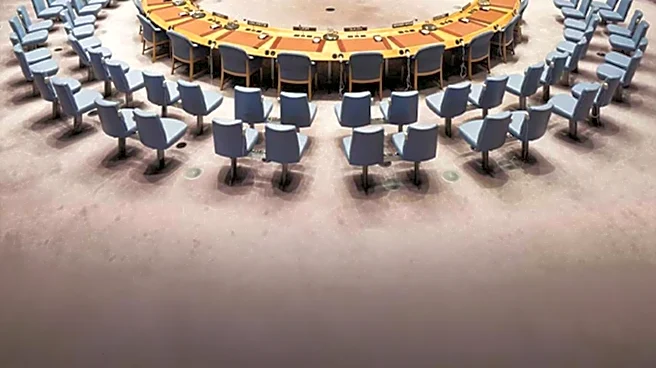
The European Union delivered a statement at a UN Security Council Arria-formula meeting, emphasizing the critical link between natural resources and peace and security. Ambassador H.E. Hedda Samson, Deputy Head of the Delegation of the European Union to
the United Nations, spoke on behalf of the EU and its Member States, with several candidate countries aligning with the statement. The EU thanked Liberia for convening the debate and the briefers for their insights, reiterating the importance of addressing how natural resources can fuel conflict and human rights violations. The statement also highlighted that if properly managed, these resources can drive sustainable development and prosperity. The EU expressed its commitment to ensuring that trade in natural resources does not perpetuate conflicts, citing its Conflict Minerals Regulation as an example.
Why It's Important?
This statement underscores the EU's ongoing commitment to addressing the root causes of conflict, particularly those exacerbated by the illicit exploitation of natural resources. For the United States, this issue resonates with its own foreign policy objectives of promoting global stability, human rights, and responsible business conduct. The EU's emphasis on initiatives like the Kimberley Process and its own Conflict Minerals Regulation aligns with international efforts to break the link between resource extraction and armed conflict. Such discussions within the UN Security Council are vital for developing coherent international standards and enforcement mechanisms. The illicit trade in resources can destabilize regions, fuel terrorism, and undermine governance, all of which have broader implications for international security and economic stability, directly affecting U.S. interests in a secure global environment.
What's Next?
The EU's statement at the Arria-formula meeting is part of a continuous dialogue within the UN Security Council on the nexus between natural resources and conflict. Future steps will likely involve further discussions on strengthening international cooperation, enhancing traceability and transparency in supply chains, and supporting the implementation of existing standards. The EU will continue to advocate for reforms in processes like the Kimberley Process to ensure their relevance and credibility. Member states and other international bodies may explore new mechanisms or reinforce existing sanctions regimes to target those who finance armed groups through illicit resource exploitation. Additionally, there may be increased focus on capacity-building in resource-rich countries to help them manage their natural wealth sustainably and prevent it from becoming a source of conflict.
Beyond the Headlines
The discussion on natural resources and conflict extends beyond immediate security concerns to encompass broader ethical, economic, and environmental dimensions. The EU's focus on responsible sourcing and the prevention of human rights abuses highlights the growing importance of corporate social responsibility in global supply chains. This also touches upon the concept of resource nationalism and the equitable distribution of wealth derived from natural resources, which can be a source of internal conflict if mismanaged. Furthermore, the debate implicitly addresses the role of international corporations and consumer demand in perpetuating or mitigating these issues. The long-term implications involve fostering sustainable development models that empower local communities, reduce dependency on conflict-prone resource extraction, and promote good governance to ensure that natural wealth benefits all citizens rather than fueling violence.