






What's Happening?
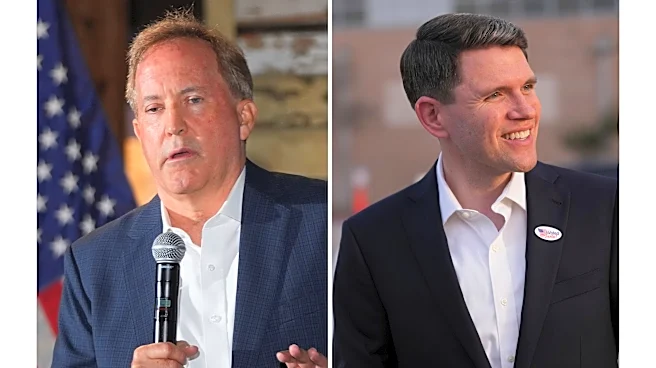
Republican Representative Bill Huizenga, who is currently running for re-election in Michigan's 4th congressional district against Democrat Sean McCann, has been identified as a sponsor of Capitol Ministries. Capitol Ministries is described as a right-wing
Christian organization that conducts congressional Bible studies, aiming to influence members of Congress to vote in alignment with the teachings of its leader, Ralph Drollinger. The ongoing House race in Michigan's 4th district is one of several competitive races across the U.S. where incumbents and challengers are vying for seats. The mention of Huizenga's affiliation with Capitol Ministries highlights the intersection of religious organizations and political influence in U.S. legislative bodies.
Why It's Important?
The identification of Representative Bill Huizenga as a Capitol Ministries sponsor is important because it sheds light on the role of religious organizations in shaping U.S. politics and policy. Capitol Ministries' stated goal of guiding congressional votes based on specific religious interpretations suggests a potential influence on legislative decisions, which could impact a wide range of issues from social policies to economic regulations. For voters, this information provides insight into the ideological leanings and potential external influences on their elected representatives. For the broader political landscape, it underscores the ongoing debate about the separation of church and state and the extent to which religious beliefs should inform governmental actions. The involvement of such groups can also affect campaign dynamics, as candidates may be scrutinized for their affiliations and the implications these connections have for their policy stances.
What's Next?
As the House race in Michigan's 4th congressional district continues, the affiliation of Representative Huizenga with Capitol Ministries may become a point of discussion during the campaign. Voters and political commentators might further examine the nature of Capitol Ministries' influence and its alignment with Huizenga's policy positions. The outcome of this race, like others involving candidates with similar affiliations, could indicate the public's receptiveness to candidates associated with religiously-motivated political organizations. Additionally, the broader scrutiny of groups like Capitol Ministries may intensify, potentially leading to increased transparency demands regarding their activities and their impact on legislative processes. The ongoing election cycle will serve as a test of how such affiliations resonate with the electorate.
Beyond the Headlines
The involvement of organizations like Capitol Ministries in congressional affairs raises deeper questions about the nature of political advocacy and religious freedom in the U.S. While religious groups have a constitutional right to engage in political discourse, the practice of conducting Bible studies specifically aimed at influencing legislative votes can blur the lines between spiritual guidance and political lobbying. This dynamic can lead to concerns about undue influence, particularly if the teachings promoted by such groups are perceived as dictating policy rather than merely informing personal conscience. The long-term implications could include a more pronounced religious polarization in politics, where legislative decisions are increasingly framed through a theological lens, potentially alienating segments of the population who do not share those specific religious views. It also highlights the continuous challenge of maintaining a pluralistic democracy while respecting diverse belief systems.