







What's Happening?
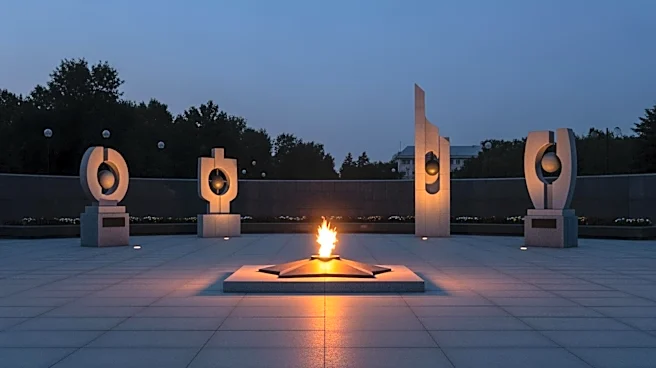
The Knesset held its annual Holocaust Remembrance Day ceremony, featuring stories from Holocaust survivors to honor the memory of six million victims. The event included participation from Israeli officials, including President Isaac Herzog and Prime
Minister Benjamin Netanyahu. Survivors shared personal accounts of their experiences, highlighting the atrocities they endured and their resilience. The ceremony also addressed the ongoing challenge of preserving the memory of those who perished, with many victims' names still unknown. The event emphasized the importance of remembrance and the need to combat antisemitism.
Why It's Important?
The ceremony underscores the significance of Holocaust Remembrance Day in preserving the memory of the Holocaust and educating future generations. By sharing survivors' stories, the event highlights the personal and collective impact of the Holocaust, reinforcing the importance of historical awareness. The participation of Israeli leaders and the focus on remembrance serve as a reminder of the ongoing responsibility to combat antisemitism and ensure that the lessons of the Holocaust are not forgotten. This commemoration is crucial for fostering a culture of remembrance and resilience in the face of historical trauma.
What's Next?
As the number of Holocaust survivors dwindles, there is an urgent need to document their stories and ensure that their experiences are preserved for future generations. Educational initiatives and memorial projects will play a vital role in keeping the memory of the Holocaust alive. The Knesset's commitment to remembrance highlights the importance of continued efforts to combat antisemitism and promote historical awareness. Future ceremonies and educational programs will be essential in sustaining these efforts and fostering a deeper understanding of the Holocaust's impact.
Beyond the Headlines
The ceremony raises broader questions about the role of memory and storytelling in shaping collective identity and historical consciousness. It highlights the ethical responsibility of societies to honor and learn from the past, ensuring that the lessons of the Holocaust are integrated into contemporary discourse. The focus on remembrance and resilience serves as a powerful reminder of the enduring impact of historical trauma and the importance of preserving dignity and meaning in the lives of survivors.