


What's Happening?
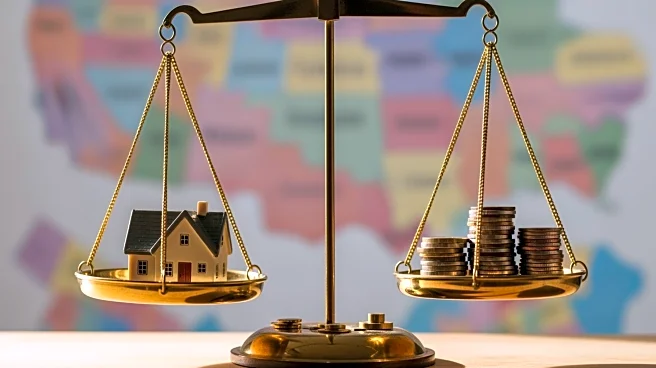
A growing movement across several U.S. states is advocating for the abolition of property taxes, driven by citizens who feel burdened by rising tax rates. In Ohio, Beth Blackmarr leads a grassroots effort to end property taxes, citing the increasing share
of her mortgage payment going towards taxes. The movement is gaining traction as similar initiatives emerge in other states. In South Dakota, a proposal aims to replace property taxes with a 'retail transaction' tax, which would impose a flat fee on transactions over $15. Meanwhile, Nebraska's EPIC initiative seeks to eliminate not only property taxes but also income and inheritance taxes, replacing them with a broad consumption tax. These efforts reflect a widespread dissatisfaction with the current property tax system, which many argue threatens homeownership by making it difficult for individuals to keep up with payments.
Why It's Important?
The push to abolish property taxes highlights a significant shift in how citizens view taxation and property ownership. If successful, these initiatives could fundamentally alter state revenue systems, impacting public services funded by property taxes, such as education and infrastructure. The proposed alternatives, like consumption taxes, could redistribute the tax burden, potentially affecting consumer behavior and economic activity. For states like Nebraska, the proposed changes could lead to higher consumption tax rates, which might drive consumers to shop in neighboring states with lower taxes. This movement underscores a broader debate about tax fairness and the balance between state revenue needs and individual financial burdens.
What's Next?
The success of these initiatives depends on gathering sufficient support and signatures to place them on state ballots. In Ohio, the Citizens for Property Tax Reform group aims to collect 600,000 signatures by July to qualify for the November ballot. In South Dakota and Nebraska, similar efforts are underway to gather support for their respective proposals. If these measures make it to the ballot, they will face scrutiny and debate over their potential economic impacts and feasibility. Lawmakers and citizens alike will need to consider the long-term implications of replacing property taxes with alternative revenue systems.