
What's Happening?
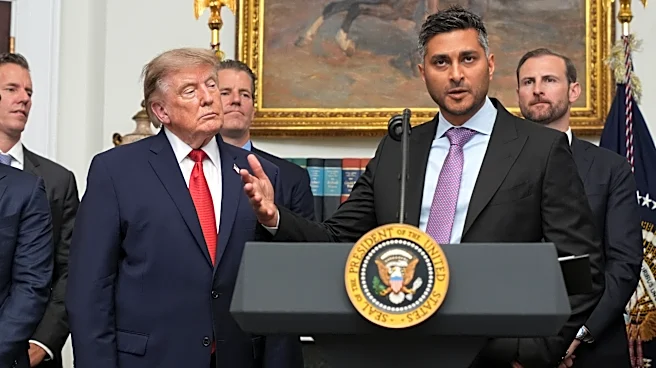
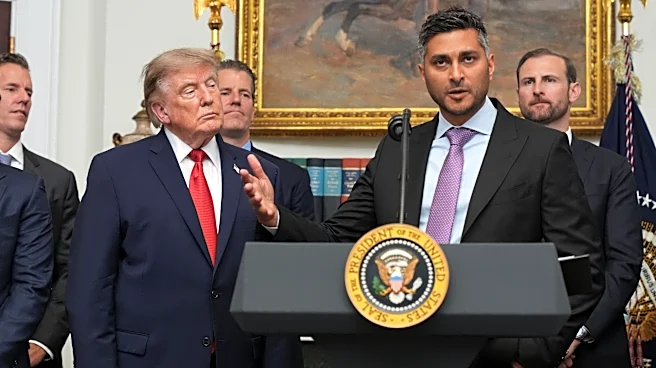
President Trump has agreed to new ethics provisions aimed at facilitating the passage of a comprehensive cryptocurrency bill in the Senate. These rules specifically prohibit federally elected officials,
including President Trump and his wife, from issuing meme coins. This concession follows demands from key senators and marks a shift in President Trump's stance on cryptocurrency, which he previously viewed with skepticism but has since embraced due to its appeal among younger and Black voters. The agreement also includes a provision for state attorneys general to enforce the law, a critical point for Democrats concerned about potential conflicts of interest. The fate of the $2.3 trillion cryptocurrency market now hinges on a pivotal Senate vote, which will determine if these ethics provisions are sufficient to secure the bill's legitimacy.
Why It's Important?
This development is significant for the U.S. cryptocurrency market and political landscape. The proposed ethics rules aim to address concerns about potential conflicts of interest, particularly given President Trump's substantial crypto holdings and past involvement with meme coins. By agreeing to these provisions, President Trump is attempting to clear a path for legislation that could bring greater legitimacy and regulatory clarity to the burgeoning digital assets industry. The inclusion of state attorneys general in enforcement mechanisms is a crucial aspect, as it seeks to ensure accountability and build trust across the political spectrum. The outcome of the Senate vote will not only impact the regulatory framework for cryptocurrency but also set a precedent for how elected officials' financial interests are managed in emerging markets, potentially influencing future legislation and campaign finance dynamics.
What's Next?
A pivotal Senate vote on the cryptocurrency bill is scheduled for Tuesday. The outcome will largely depend on whether the agreed-upon ethics provisions, including the ban on meme coin issuance by officials and the enforcement role of state attorneys general, are deemed sufficient by senators, particularly key Democrats. If the bill passes, it would establish a new regulatory framework for the cryptocurrency market, potentially leading to increased mainstream adoption and investment. Conversely, if the provisions are not enough to secure passage, the frustrated cryptocurrency industry could significantly increase its campaign spending in upcoming midterm elections, further influencing the political discourse around digital assets. Discussions may also continue regarding the requirement for President Trump to place his crypto holdings in a blind trust or divest them if they reach a certain value, a proposal that was partially accepted.
Beyond the Headlines
The agreement highlights a broader tension between personal financial interests of elected officials and the need for robust ethical oversight, especially in rapidly evolving sectors like cryptocurrency. The shift in President Trump's view on crypto, from skepticism to advocacy, underscores the growing political influence of digital assets and their appeal to diverse voter demographics. This situation also brings to light the challenges of applying traditional ethics laws to modern financial instruments and the unique position of a president, who is often exempt from certain federal conflict-of-interest statutes. The debate over enforcement mechanisms, particularly the role of state attorneys general, reflects deep-seated concerns about the impartiality of federal enforcement and the potential for political weaponization of legal processes. This legislative effort could redefine the ethical boundaries for public servants engaging with new financial technologies.