
What's Happening?
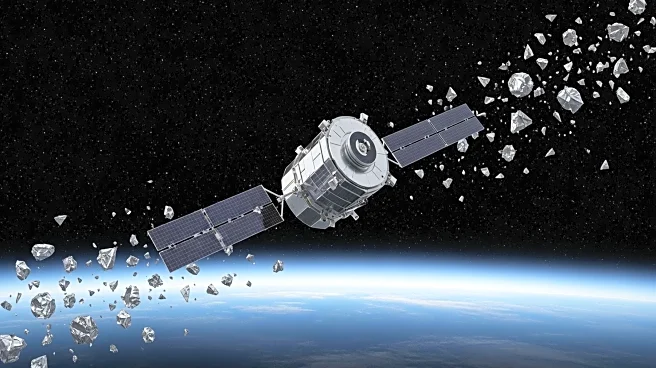
The growing issue of space debris is posing significant risks to orbital safety, as highlighted by a recent incident involving China's Shenzhou-20 spacecraft. The spacecraft's window was found to have
small cracks caused by impacts from space debris, prompting a delay in its return to Earth. This incident underscores the increasing danger of collisions in space, exacerbated by the accumulation of debris from various sources, including anti-satellite weapons testing. Experts warn that the situation is worsening, with millions of debris fragments orbiting Earth, raising concerns about the long-term sustainability of space activities.
Why It's Important?
The Shenzhou-20 incident brings attention to the urgent need for international cooperation and effective management of space debris. As space becomes more congested, the risk of collisions increases, threatening both manned and unmanned missions. The incident highlights the importance of developing robust tracking and mitigation strategies to ensure the safety and sustainability of space operations. It also emphasizes the need for global standards and accountability in managing space activities to prevent further escalation of the debris problem.