



What's Happening?
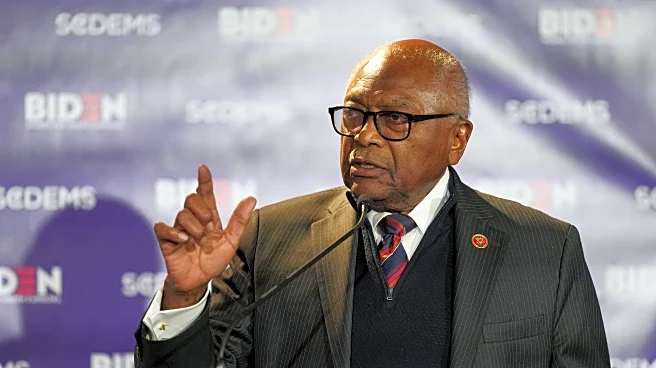
Rep. James E. Clyburn, a prominent Democratic figure from South Carolina, has announced his intention to seek reelection. Clyburn, who has been a significant player in the Democratic Party for over three decades, was instrumental in securing Joe Biden's
2020 presidential nomination through his endorsement. His decision to run again comes at a time when the Democratic Party is experiencing a push for generational change, with younger candidates challenging long-standing incumbents. Clyburn, who turns 86 in July, has previously held the position of Democratic whip and currently serves as an assistant Democratic leader. His announcement follows the retirement of other senior Democratic leaders, such as Nancy Pelosi and Steny H. Hoyer, highlighting a broader shift within the party.
Why It's Important?
Clyburn's decision to run for reelection is significant as it underscores the ongoing debate within the Democratic Party regarding leadership and generational change. As younger Democrats push for new voices and perspectives, Clyburn's candidacy represents the experience and continuity valued by some constituents. His influence in Congress, particularly in shaping policy and supporting key Democratic initiatives, remains a critical factor for the party. The outcome of his reelection bid could impact the party's strategy and cohesion, especially as it navigates internal dynamics and prepares for future elections. Clyburn's role in Congress is also pivotal for South Carolina, where his leadership has been a constant for decades.
What's Next?
As Clyburn prepares for his reelection campaign, he will likely face challenges from younger Democratic candidates advocating for change. The primary elections will serve as a litmus test for the party's direction, balancing the need for experienced leadership with the demand for fresh perspectives. Clyburn's campaign will need to address these dynamics while reinforcing his contributions and vision for the future. The broader implications for the Democratic Party include potential shifts in policy priorities and leadership structures, depending on the outcomes of these generational contests.