

What's Happening?
The National Transportation Safety Board (NTSB) and families of victims from a mid-air collision near Washington D.C. are voicing concerns over a section in the National Defense Authorization Act (NDAA) related to helicopter safety. Section 373 of the bill,
titled 'manned rotary wing aircraft safety,' mandates that helicopters be electronically visible and integrated with safety systems used by airliners to prevent collisions in busy U.S. airspace, including the D.C. area. However, NTSB Chairwoman Jennifer Homendy and the families argue that the provision is inadequate and poses a risk to public safety. They claim it allows military aircraft to operate without necessary safety systems and provides too much discretion to military departments without sufficient oversight from the Federal Aviation Administration (FAA) or other stakeholders. The House has passed the NDAA, and it is now pending in the Senate.
Why It's Important?
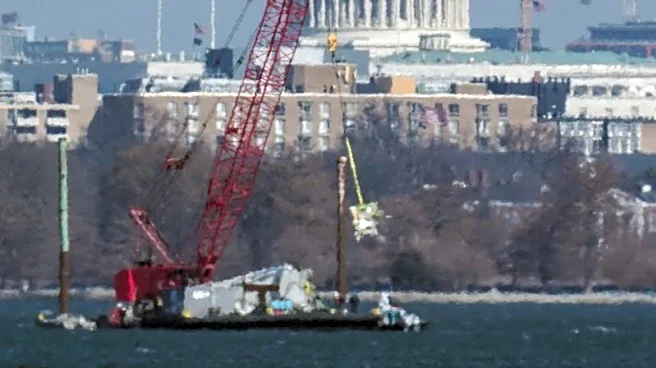
The controversy surrounding Section 373 of the NDAA highlights significant concerns about aviation safety, particularly in the densely trafficked airspace around the nation's capital. The provision's critics argue that it could undermine safety improvements made after previous tragedies, potentially increasing the risk of future accidents. The issue is particularly sensitive given the past mid-air collision that resulted in 67 fatalities, underscoring the need for stringent safety measures. The debate also reflects broader tensions between military operational flexibility and civilian air safety, with potential implications for how military and civilian aircraft share airspace. The outcome of this legislative process could set precedents for future aviation safety regulations and military-civilian airspace coordination.
What's Next?
As the NDAA moves to the Senate, further discussions and potential amendments to Section 373 are anticipated. Lawmakers, including Senators Mark Warner and Tim Kaine, have expressed intentions to address the safety concerns raised by the NTSB and the victims' families. The upcoming release of reports by the NTSB and the Army regarding the January 29 crash may provide additional insights and influence legislative decisions. There is also a push for the ROTOR Act, which aims to implement comprehensive aviation safety reforms, to be passed swiftly. The ongoing debate is likely to involve negotiations between Congress, the Department of Defense, and aviation safety advocates to find a balanced solution that enhances safety without compromising military operations.
Beyond the Headlines
The debate over helicopter safety provisions in the NDAA raises broader questions about the balance between national security and public safety. The provision's critics argue that national security waivers could be exploited, potentially compromising airspace safety. This situation highlights the need for transparent and accountable safety standards that do not rely on exemptions. The incident also underscores the importance of integrating advanced technology in aviation safety protocols to prevent tragedies. The outcome of this legislative process could influence future policy decisions regarding the integration of military and civilian air operations, setting a precedent for how safety and security are balanced in U.S. airspace.