





What's Happening?
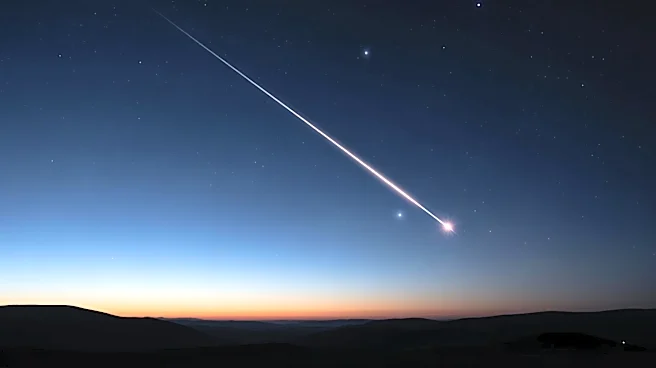
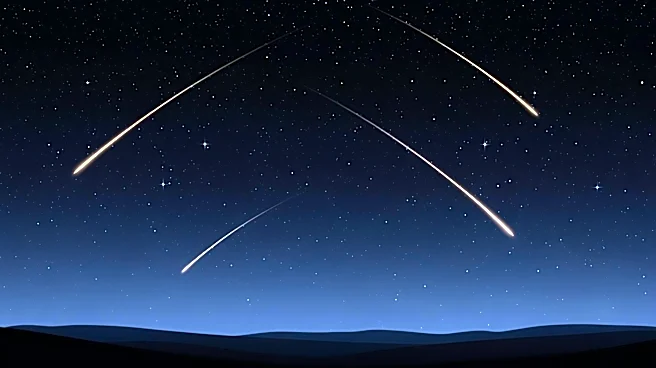
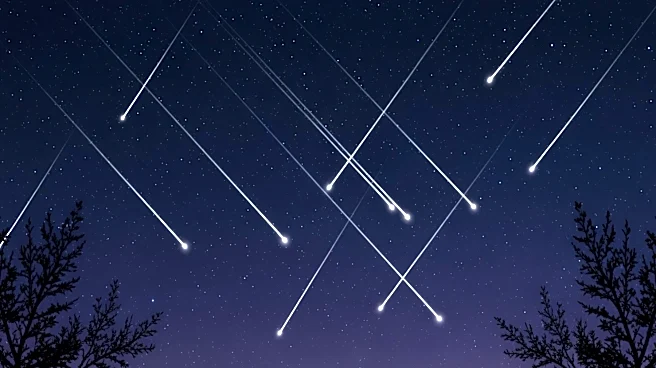
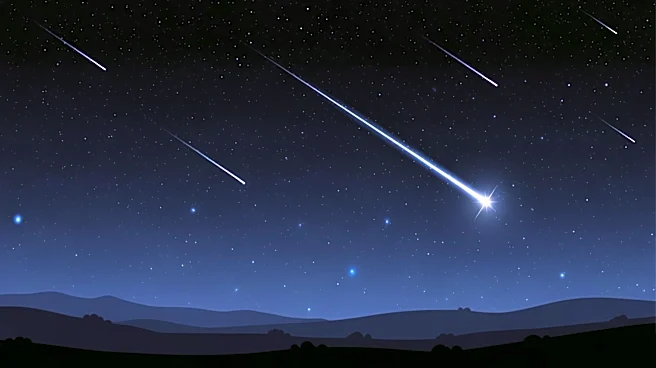
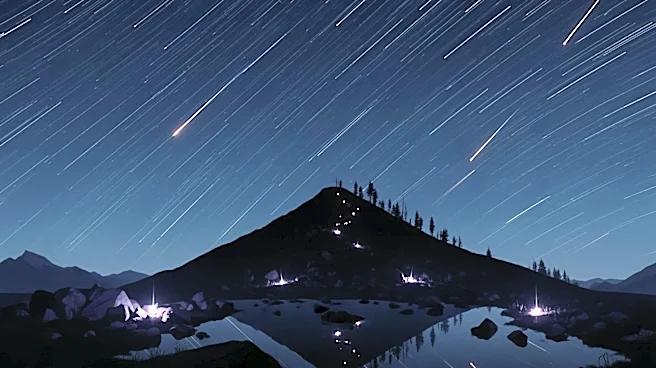
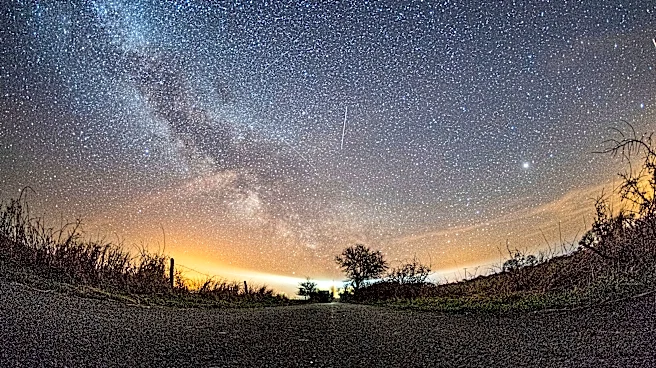
The annual Lyrid meteor shower is set to peak on Tuesday night, offering a celestial display of 15 to 20 meteors per hour. The meteors will appear to emanate from the constellation Lyra, with the star Vega serving as a key point of reference. Vega will rise
above the northeastern horizon shortly after 9 p.m. and ascend higher in the sky after midnight. While Tuesday night marks the peak, the best viewing conditions are expected on Monday night due to clearer skies. However, viewers should prepare for cold temperatures, as lows are predicted to drop below freezing in areas away from city centers. To optimize viewing, it is recommended to avoid areas with light pollution and wait until after midnight when the moon sets, ensuring a darker sky.
Why It's Important?
The Lyrid meteor shower is one of the oldest known meteor showers, with records dating back over 2,700 years. It provides an opportunity for both amateur and professional astronomers to observe and study meteors, contributing to our understanding of these celestial phenomena. For the general public, the event offers a chance to engage with astronomy and appreciate the natural beauty of the night sky. The meteor shower also serves as a reminder of the vastness and complexity of the universe, potentially inspiring interest in science and space exploration. Additionally, such events can boost local tourism in areas with optimal viewing conditions, as enthusiasts travel to experience the spectacle.
What's Next?
Following the peak of the Lyrid meteor shower, the event will continue to be visible until April 25, albeit with decreasing intensity. Stargazers and astronomy clubs may organize viewing events, especially in areas with minimal light pollution. As the meteor shower concludes, attention will shift to upcoming astronomical events, such as the Eta Aquarids in May. These events provide ongoing opportunities for public engagement with astronomy and for scientists to gather data on meteor activity. Additionally, advancements in technology may enhance future observations, allowing for more detailed analysis of meteor showers.