


What's Happening?
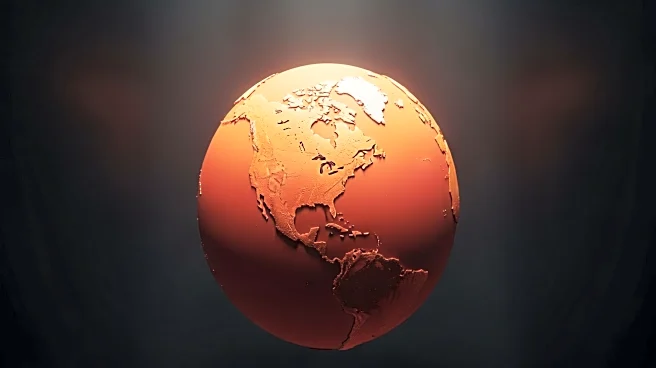
European scientists have reported that global temperatures have risen to approximately 1.4 degrees Celsius above pre-industrial levels, marking 2025 as the third-hottest year on record. This increase is primarily attributed to the accumulation of greenhouse
gases, particularly from fossil fuel combustion. The Copernicus Climate Change Service highlighted that the last three years have been exceptionally warm, with the average temperature exceeding 1.5C over this period. The report warns of the potential for crossing the 1.5C threshold set by the Paris Agreement, which could lead to irreversible climate impacts such as rainforest diebacks and ocean circulation collapse.
Why It's Important?
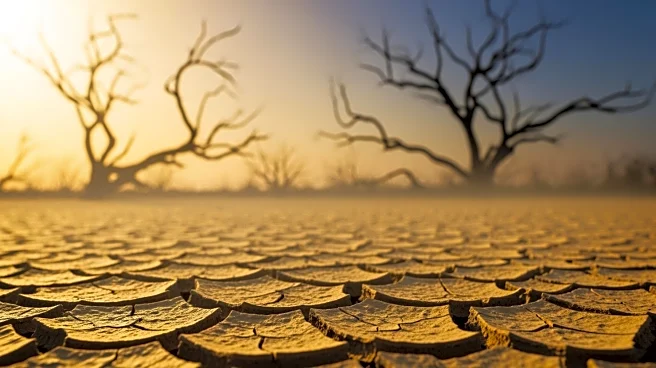
The rise in global temperatures poses significant risks, including more frequent and severe heatwaves, rising sea levels, and the potential triggering of climate tipping points. These changes could have profound impacts on ecosystems, agriculture, and human health. The inability to curb greenhouse gas emissions could exacerbate these effects, leading to increased economic and social challenges. The report underscores the urgency of developing and implementing technologies to remove carbon dioxide from the atmosphere to manage the overshoot of the 1.5C threshold.
What's Next?
As the world approaches the 1.5C threshold, there is a pressing need for international cooperation to mitigate climate change impacts. Policymakers and scientists are likely to focus on strategies to reduce emissions and enhance carbon capture technologies. The potential for overshooting the 1.5C target necessitates discussions on adaptation measures to manage the increased risks associated with higher temperatures. The effectiveness of these measures will depend on global commitment and the development of scalable technologies.
Beyond the Headlines
The ongoing rise in global temperatures highlights the ethical responsibility of nations to address climate change. The disproportionate impact on vulnerable communities and developing countries raises questions about climate justice and equity. Long-term shifts in climate patterns could lead to geopolitical tensions over resources and migration, emphasizing the need for comprehensive international policies.