


What's Happening?
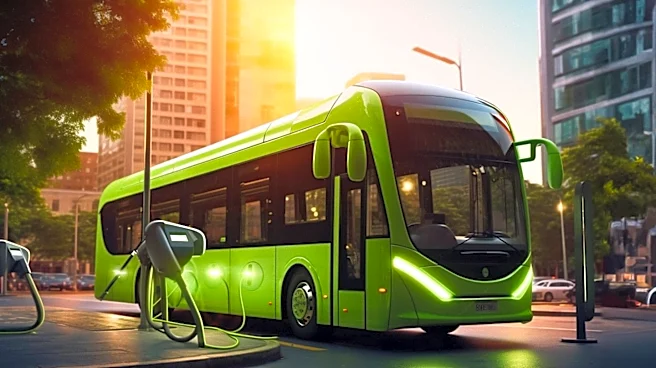
Lagos State has received 11 new electric buses from Oando Clean Energy Limited, the clean-energy division of Nigerian oil and gas group Oando. This delivery, confirmed by the Lagos Metropolitan Area Transport Authority (LAMATA), brings Oando's total supply
of electric buses to Lagos to 13, including two pilot buses introduced in May 2023. The long-term objective of Oando Clean Energy is to deploy 552 fully electric buses in Lagos State. Each Yutong-manufactured bus can accommodate 39 seated and 40 standing passengers and is equipped with air conditioning, onboard Wi-Fi, 360-degree cameras, and wheelchair access. The pilot buses have reportedly carried approximately 788,000 passengers and covered about 433,000 km, avoiding an estimated 216,000 liters of diesel.
Why It's Important?
This expansion of Lagos's electric bus fleet marks a significant step towards sustainable public transportation in Africa's largest city. The initiative aims to reduce the city's carbon footprint, improve air quality, and provide a more comfortable and reliable commuting experience for its residents. For the U.S., this development highlights the global trend towards electric vehicles and sustainable urban planning, offering insights into how other megacities are addressing environmental and transportation challenges. The partnership between a local energy company and a state transport agency demonstrates a model for public-private collaboration in advancing green technology. The success of this project could influence investment in similar clean energy initiatives across developing economies, impacting global efforts to combat climate change and promote sustainable development.
What's Next?
Oando Clean Energy plans to launch an additional 39 electric buses, completing the first phase of 50 buses, although no specific delivery date has been provided. The company's long-term goal of deploying 552 fully electric buses in Lagos State also lacks a defined timeline. Key details such as when the 11 new buses will enter paid service, the number of charging stations to be built, the cost of the buses, and ownership structures have not yet been disclosed by Oando or LAMATA. The progress of this initiative will be closely monitored, particularly regarding the rollout schedule and the operational efficiency of the expanded fleet. Future updates are expected to clarify these outstanding details and provide a clearer roadmap for achieving the ambitious 552-bus target.
Beyond the Headlines
The transition to electric buses in Lagos carries deeper implications beyond immediate environmental and transportation benefits. It signifies a broader commitment to energy transition and technological adoption in a region heavily reliant on fossil fuels. This move could stimulate local job creation in maintenance, charging infrastructure development, and related services. Furthermore, the data collected from the pilot and subsequent phases will be crucial for understanding the practicalities and challenges of operating large-scale electric public transport in a demanding urban environment. The initiative also raises questions about the long-term sustainability of such projects, including the sourcing of renewable energy for charging, battery disposal, and the overall economic viability without significant subsidies. It represents a critical step in Lagos's journey towards becoming a smart, sustainable city.