



What's Happening?
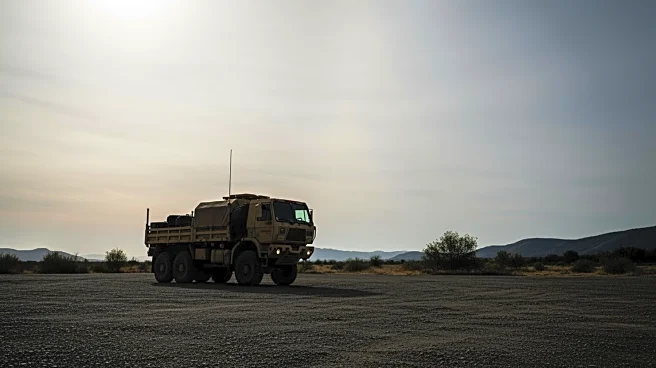
The US Army has decided to pause its Common Tactical Truck (CTT) acquisition plan, which aims to replace its current fleet of trucks. This decision follows a series of requests for information (RFIs) issued in late 2025, which prompted a reassessment
of the program. The Army had initially planned to conduct testing to support a single-vendor contract award, with prototypes submitted by four companies: Navistar Defense, a team of American Rheinmetall and GM Defense, Mack Defense, and Oshkosh Defense. These prototypes were intended to replace several existing vehicle models, including the M915 Line-Haul Tractor and the M1088 Medium Tractor. The Army Requirements Oversight Council (AROC) was expected to finalize the requirements in fiscal year 2026. However, the pause indicates a reevaluation of the program's direction and requirements.
Why It's Important?
The pause in the CTT acquisition plan is significant as it reflects the Army's cautious approach to modernizing its vehicle fleet. This decision could impact the timeline and budget for the program, which was initially set to begin low-rate initial production by fiscal year 2028. The reassessment may lead to changes in the program's scope, affecting the defense contractors involved and potentially altering the competitive landscape. The outcome of this reassessment could influence future military procurement strategies and the Army's operational capabilities, as the new vehicles are intended to enhance logistical support and mobility.
What's Next?
The Army's next steps will likely involve a detailed review of the feedback received from the RFIs and further analysis of the program's requirements. The Army Requirements Oversight Council is expected to play a crucial role in determining the final specifications and timeline for the CTT program. Stakeholders, including the defense contractors involved, will be closely monitoring the Army's decisions, as these will affect contract opportunities and production schedules. The Army's reassessment may also prompt discussions on broader defense procurement policies and the integration of new technologies into military operations.