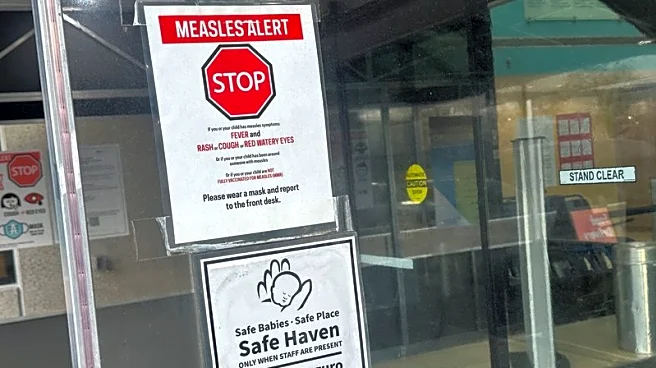




What's Happening?
Health officials in Sussex County, New Jersey, are investigating an outbreak of gastrointestinal illness believed to be caused by norovirus. The Sussex County Division of Health reported an increase in symptoms such as diarrhea, nausea, and vomiting,
particularly among individuals who dined out in the area between January 30 and February 1. Norovirus, a common viral stomach illness, is known for causing symptoms like excessive vomiting and diarrhea, which can lead to severe dehydration, especially in young children and older adults. The Centers for Disease Control and Prevention (CDC) notes that norovirus causes approximately 900 deaths annually, primarily among adults aged 65 and older. The virus spreads quickly, with symptoms typically developing 12 to 48 hours after exposure. Health officials emphasize the importance of preventative measures, such as avoiding food preparation when sick and thorough handwashing, to curb the spread of the virus.
Why It's Important?
The outbreak highlights the ongoing public health challenge posed by norovirus, which is highly contagious and can lead to significant health complications. The situation underscores the need for effective public health communication and preventive strategies to manage viral outbreaks. The impact is particularly severe for vulnerable populations, such as the elderly and young children, who are at higher risk of dehydration and other complications. The outbreak also stresses the importance of community awareness and cooperation in identifying and mitigating the spread of infectious diseases. The response from health officials, including public advisories and investigations, plays a crucial role in controlling the outbreak and preventing further cases.
What's Next?
Health officials are likely to continue monitoring the situation closely, providing updates and guidance to the public as more information becomes available. They may also conduct further investigations to confirm the source of the outbreak and implement additional control measures if necessary. Public health campaigns may be intensified to educate residents on the importance of hygiene and preventive practices. The situation may prompt a review of local health policies and emergency response plans to better prepare for future outbreaks.