






What's Happening?
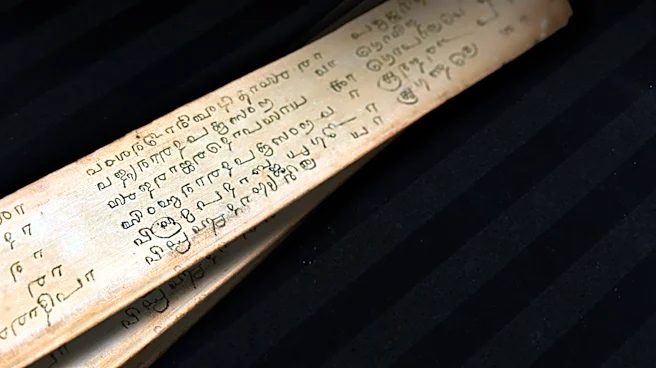
Frederick Porter Smith's 1867 Chinese medical and everyday-health booklet, 'Bao mian lan chu' (Preventing and averting illness), is being utilized for historical research. The Bodleian Libraries' Sinica 2044 catalog entry identifies the booklet as published
in Hankow, with Baoshan jushe named as the block holder. This historical document covers a wide range of topics including housing, diet, mental and physical activity, cleanliness, internal and external medicine, eye conditions, women's health, and infant care. It uniquely links health discourse with Christian vocabulary, offering insights into medical translation, missionary publishing, and daily life in late-Qing China. A transcription dataset, based on 21 digital captures, provides TXT, JSON, and TEI XML formats, with an AI initial transcription and a separate AI source-only reading for adjudication.
Why It's Important?
This research into 'Bao mian lan chu' is significant for understanding the intersection of Western and Chinese medical practices during the late-Qing dynasty. The booklet's content provides a rare glimpse into public health advice and medical knowledge disseminated during a period of significant cultural exchange. Its integration of Christian vocabulary within a medical context highlights the influence of missionary efforts on Chinese society and the ways in which foreign concepts were adapted and communicated. For historians and scholars, this document offers valuable primary source material for studying medical anthropology, the history of science, and the dynamics of cultural diffusion. The digital transcription and AI-assisted analysis further enhance accessibility and research capabilities, allowing for deeper textual analysis and broader academic engagement with this unique historical artifact.
What's Next?
The ongoing transcription and analysis of 'Bao mian lan chu' are expected to contribute to a more comprehensive understanding of medical and social history in late-Qing China. Future research may involve full human double collation and expert review to resolve remaining ambiguities in the transcription and provide a definitive scholarly edition. This work could lead to new academic publications, exhibitions, or educational resources that shed light on historical health practices and cross-cultural interactions. The digital format of the dataset also opens possibilities for computational linguistics and digital humanities projects, further exploring the linguistic and thematic patterns within the text. The insights gained from this booklet could inform broader discussions on the global history of medicine and the impact of cultural encounters on scientific knowledge.
Beyond the Headlines
Beyond its immediate historical and medical significance, 'Bao mian lan chu' offers a window into the broader societal values and daily concerns of late-Qing China. The inclusion of topics like housing, diet, and mental activity suggests a holistic approach to health that resonates with contemporary wellness trends. The blend of traditional Chinese medical concepts with Western missionary perspectives illustrates the complex process of cultural synthesis and adaptation. This document also raises questions about the authority and dissemination of medical knowledge in a pre-modern context, and how health advice was communicated to the general populace. The use of AI in transcribing and analyzing such historical texts also highlights the evolving methodologies in humanities research, demonstrating how technology can unlock new avenues for understanding the past and preserving cultural heritage.