







What's Happening?
The Civitas Institute, through an article by Josh Blackman, Centennial Chair of Constitutional Law at South Texas College of Law Houston, has proposed structural reforms aimed at diminishing the 'cult of judicial celebrity' surrounding Supreme Court Justices.
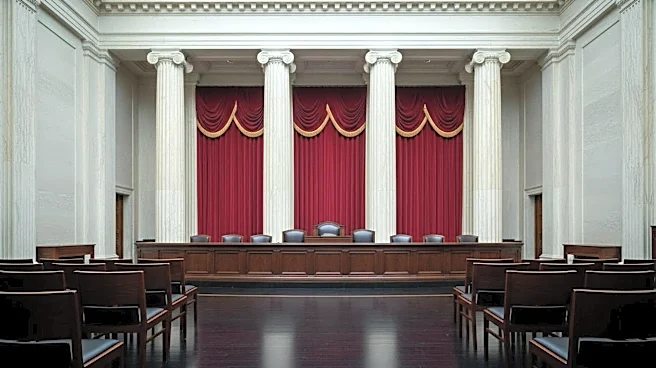
The article argues that while recent criticisms have focused on ethical lapses, the more significant risk is how external interactions and fawning attention can warp a Justice's jurisprudence and distort their perception of their role. Blackman suggests that Justices should emulate lower court judges by abstaining from special perks and refraining from profiting from their public office. Specific recommendations include removing the Chief Justice from the role of Chancellor of the Smithsonian Institution, ending the practice of Justices borrowing artifacts from federal repositories, and installing name plaques for Justices in the courtroom. The article also addresses the issue of Justices securing lucrative book deals after joining the bench, proposing that Congress impose caps on royalties, with excess funds directed to the Holmes Devise trust.
Why It's Important?
This proposal is important because it addresses concerns about the perceived impartiality and public image of the U.S. Supreme Court. By suggesting measures to reduce the 'celebrity' status of Justices, the Civitas Institute aims to foster a perception of the Court as a co-equal branch of government, rather than an institution whose members are subject to undue external influence or personal gain. The recommendations, if implemented, could impact how Justices interact with the public, manage their personal finances, and engage in activities outside their judicial duties. This could lead to a more focused and less publicly scrutinized judiciary, potentially restoring public trust and confidence in the institution. The debate over judicial ethics and the appropriate conduct for Supreme Court Justices has significant implications for the integrity of the U.S. legal system and the balance of power within the federal government.
What's Next?
The proposals put forth by the Civitas Institute are likely to spark further discussion among legal scholars, policymakers, and the public regarding judicial ethics and Supreme Court reform. While these suggestions are currently recommendations, they could influence future legislative efforts or internal policy changes within the judiciary. Congress could consider legislation to modify the Chief Justice's role at the Smithsonian or to impose caps on judicial book royalties. The Supreme Court itself might review its internal customs and practices, such as the borrowing of artifacts or the display of name plaques, in response to these discussions. Stakeholders, including legal advocacy groups and civil society organizations, may amplify these calls for reform, pushing for greater transparency and accountability from the nation's highest court. The ongoing dialogue about judicial conduct and the 'cult of celebrity' is expected to continue shaping the conversation around the future of the Supreme Court.
Beyond the Headlines
Beyond the immediate policy implications, this discussion delves into the deeper ethical and cultural dimensions of judicial service in the United States. The concept of a 'judicial celebrity' raises questions about the appropriate balance between public engagement and judicial impartiality. The article implicitly critiques a cultural trend where public figures, including judges, are increasingly subject to media attention and personal branding. This can blur the lines between public service and personal gain, potentially undermining the perceived objectivity of the judiciary. The proposals also touch upon the long-term shifts in how the public views its institutions and leaders. In an era of heightened scrutiny and political polarization, maintaining the integrity and perceived independence of the Supreme Court is crucial for the stability of democratic governance. The debate over these reforms reflects a broader societal concern about accountability and the ethical conduct of those in positions of power.