
What's Happening?
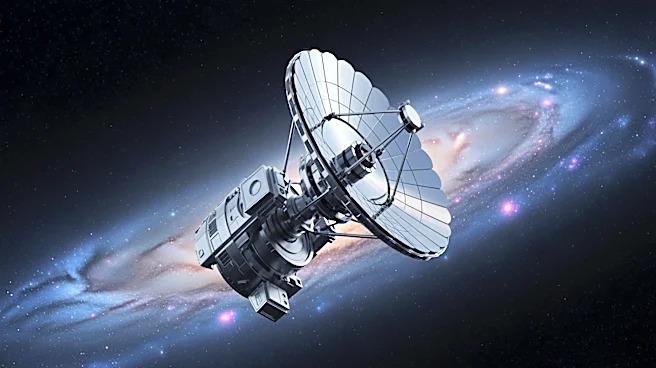
NASA's Nancy Grace Roman Space Telescope is poised to significantly expand the search for exoplanets, potentially discovering around 100,000 new worlds. Unlike previous missions that focused on nearby
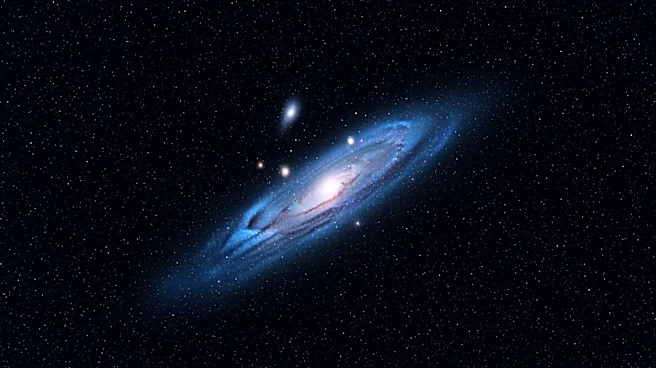
regions, Roman will explore largely uncharted areas of the Milky Way, including its densely packed central bulge. The telescope will employ techniques such as planetary transits and microlensing to detect planets, offering a broader view of planetary systems. This mission aims to investigate how planets form across different galactic environments, providing insights into the diversity of planetary systems.
Why It's Important?
The Roman Telescope's mission is crucial for advancing our understanding of exoplanetary science. By exploring new regions of the Milky Way, it will provide a more comprehensive picture of how planets form and evolve in different environments. This could lead to discoveries about the conditions necessary for planet formation and the potential for life beyond Earth. The mission's findings will also enhance our knowledge of the galaxy's structure and the distribution of planetary systems, contributing to the broader field of astrophysics.
What's Next?
As the Roman Telescope begins its survey, scientists will analyze the data to identify new exoplanets and study their characteristics. The mission will likely lead to collaborations with other observatories, such as the James Webb Space Telescope, to conduct detailed analyses of discovered planets. Researchers will also use the data to refine models of planet formation and assess the potential habitability of these new worlds. The mission's success could pave the way for future explorations of even more distant regions of the universe.