






What's Happening?
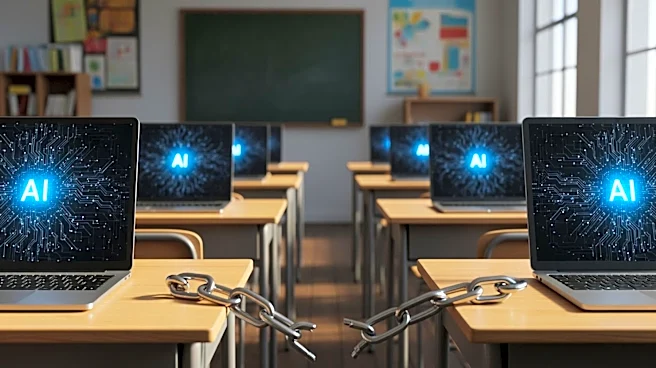
Parents across the United States are increasingly voicing concerns over the integration of artificial intelligence (AI) in elementary school classrooms. The use of AI tools, such as Google's Gemini on school-provided Chromebooks, has sparked debates among
parents, many of whom are worried about the unsupervised access their children have to these technologies. Reports indicate that students are using AI tools for unintended purposes, such as creating humorous images, which raises questions about the appropriateness and effectiveness of AI in educational settings. The introduction of AI in schools has led to a broader discussion about the role of technology in education, with some parents organizing to oppose these changes. Concerns are not limited to AI; parents are also scrutinizing other tech-enabled learning tools, questioning their impact on students' academic performance and overall well-being.
Why It's Important?
The growing parental backlash against AI in schools highlights significant concerns about the impact of technology on education. As AI becomes more prevalent in classrooms, it raises questions about data privacy, the potential for misuse, and the effectiveness of AI-driven learning compared to traditional methods. The debate underscores a broader societal issue regarding the balance between technological advancement and educational integrity. Parents' concerns reflect a need for schools to carefully evaluate the implementation of AI and other technologies, ensuring they enhance rather than hinder learning. The outcome of this debate could influence educational policies and the future of AI integration in schools, affecting students, educators, and tech companies involved in educational technology.
What's Next?
As the debate over AI in schools continues, it is likely that more parents will organize to express their concerns and demand greater oversight and regulation of AI tools in educational settings. School districts may need to engage with parents and educators to address these concerns, potentially leading to policy changes or restrictions on AI use in classrooms. Additionally, educational institutions might conduct further research to assess the impact of AI on student learning outcomes and develop guidelines for its appropriate use. The ongoing discussions could also prompt tech companies to refine their educational products to better align with the needs and expectations of schools and parents.