




What's Happening?
Miami commissioners have given final approval to a record $3.7 billion city budget. The budget maintains the property tax rate unchanged but includes several last-minute modifications. These changes involve additional funding for festivals and special
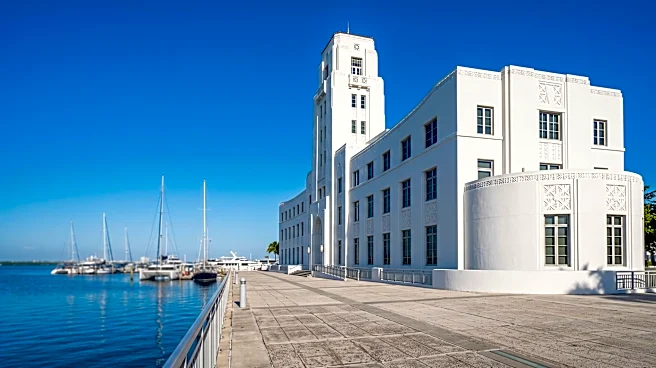
events, the distribution of $10.5 million in previously unexplained personnel savings across various city departments, and an anticipated nearly $1 million in additional revenue from city marinas. The final General Fund, which is the city's primary operating account, is approximately $1.3 billion, marking an increase of about $74 million from the current year. The overall budget, combining operating funds and the capital spending plan, totals around $3.7 billion. The property tax rate will remain at 7.108 mills for general operations and 0.2536 mills for debt service, resulting in a combined rate of 7.3616 mills. Despite a flat tax rate, the city expects an increase of approximately $43 million in General Fund property-tax revenue next year due to rising taxable property values. A significant portion of the final hearing focused on the funding for festivals, which saw its overall allocation restored to current levels after an initial proposed reduction. The money is now divided among the five commission districts, with varying amounts.
Why It's Important?
The approval of Miami's record $3.7 billion budget is significant for several reasons. Firstly, maintaining the property tax rate unchanged, despite an increase in overall revenue, directly impacts property owners in Miami, offering a degree of stability in their tax burden amidst rising property values. Secondly, the allocation of additional funds to festivals and special events highlights the city's commitment to cultural and community engagement, which can boost local tourism and small businesses that benefit from such gatherings. However, the shift in how these funds are distributed, leaving commissioners to decide individual allocations, introduces a new dynamic that could lead to varied support for different events across districts. The distribution of $10.5 million in personnel savings across departments suggests a strategic reallocation of resources, potentially impacting staffing levels and service delivery in various city functions. Furthermore, the budget reveals a substantial long-term financial challenge for Miami, with $1.8 billion in capital needs for which no funding source has been identified. This indicates that while the operational budget is set, significant infrastructure and development projects face an uncertain future, potentially requiring future tax increases or bond initiatives.
What's Next?
Miami voters will soon face a decision regarding the city's capital needs. On November 3, they will vote on whether to authorize up to $450 million in general obligation bonds. These bonds are intended to fund police and fire facilities, including new fire stations and a new public safety headquarters. The city plans to repay these bonds through property taxes, asserting that this can be done without increasing the current debt millage rate. However, even if approved, this $450 million would only address about one-quarter of the identified $1.8 billion in unfunded capital needs. This suggests that further financial strategies will be required in the future to address the remaining capital deficits. The new system for festival funding, where commissioners decide individual allocations within their districts, means event organizers will need to engage directly with their respective district commissioners to secure funding. The lack of public availability for the budget amendment before the final hearing may lead to increased scrutiny and calls for greater transparency in future budget processes.
Beyond the Headlines
The process surrounding Miami's budget approval, particularly the last-minute changes and the lack of public access to detailed amendments before the final vote, raises questions about transparency and public oversight in local governance. While the city aims to address critical infrastructure needs through general obligation bonds, the substantial gap between the proposed bond amount and the total unfunded capital needs highlights a deeper, systemic challenge in long-term urban planning and financing. This could lead to ongoing debates about fiscal responsibility, prioritization of projects, and potential future revenue-generating strategies. The shift in festival funding from specific allocations to district-level discretion could foster a more localized approach to cultural events but also potentially introduce political considerations into funding decisions. The city's reliance on competitive pay to attract and retain employees, as defended by District 2 Commissioner Damian Pardo, underscores the broader economic pressures faced by municipalities in securing skilled labor, especially in a high-cost-of-living area like Miami. This approach to personnel spending, which constitutes a significant portion of the General Fund, reflects a strategic choice that impacts both the quality of public services and the city's overall financial health.