






What's Happening?
Rangeland seeding initiatives are actively restoring degraded land and enhancing forage availability for livestock by utilizing perennial or self-sustaining plants. These plants, which include grasses, forbs, legumes, shrubs, and trees, are carefully
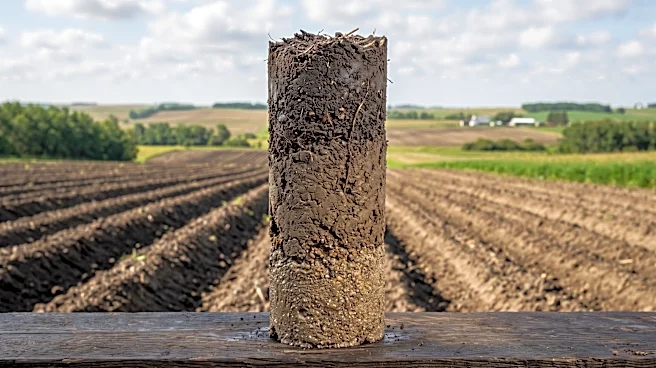
selected to match local soil, climate, and animal nutritional needs. The practice focuses on deep-rooted species that improve soil health by building organic matter, increasing nutrient availability, and enhancing water infiltration. Research, such as that from the Jena Experiment, indicates that higher plant diversity significantly increases carbon and nitrogen storage in topsoil, with these benefits becoming more pronounced over time. Mentor farmers, including those at Paicines Ranch, Wild Oat Hollow, and Big Bluff Ranch, are demonstrating these regenerative practices, showcasing tools for building forage diversity and improving soil health.
Why It's Important?
The widespread adoption of rangeland seeding and biomass initiatives holds significant importance for the U.S. agricultural sector and environmental conservation. By restoring degraded lands, these practices directly contribute to increased forage production, which is vital for livestock operations, potentially reducing feed costs and improving animal health. The enhancement of soil health through increased organic matter and improved water infiltration makes agricultural lands more resilient to drought and other environmental stressors, crucial in a changing climate. Furthermore, the documented increase in carbon and nitrogen storage in topsoil through diverse plant communities offers a natural solution for carbon sequestration, contributing to climate change mitigation efforts. This approach provides a sustainable pathway for farmers and ranchers to improve their economic viability while simultaneously benefiting the environment.
What's Next?
The ongoing research and demonstration by mentor farmers are expected to further validate the long-term benefits of rangeland seeding and native plant restoration. Continued scientific literature, such as studies on forage seeding increasing production and preventing weed invasion, will provide more robust evidence for these practices. The availability of resources like the Rangeland Seeding Fact Sheet (PDF) will facilitate broader adoption among ranchers and land managers. Future efforts will likely focus on expanding educational outreach, sharing successful case studies, and developing more tailored seed mixes for diverse ecological regions. The emphasis on livestock-based seeding without no-till drilling, as demonstrated by Russ Wilson, suggests a move towards more integrated and less equipment-intensive methods, potentially lowering barriers to entry for smaller operations.
Beyond the Headlines
Beyond the immediate agricultural and ecological benefits, the focus on rangeland seeding and biomass initiatives represents a deeper philosophical shift towards regenerative agriculture. This approach views farming not just as extraction but as a process of ecological restoration and enhancement. By prioritizing biodiversity and natural processes, these initiatives challenge conventional agricultural paradigms that often rely heavily on external inputs. The long-term implications include not only more resilient food systems and healthier ecosystems but also a re-evaluation of the relationship between human activity and natural landscapes. This could lead to policy changes that incentivize regenerative practices, greater public awareness of sustainable food production, and a more harmonious coexistence between agriculture and the environment.