



What's Happening?
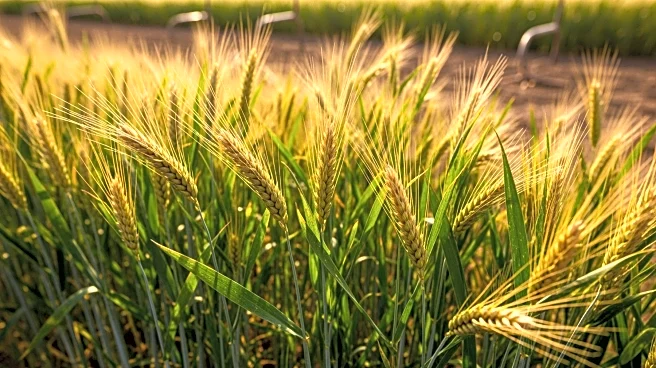
Sergipe, the smallest state in Brazil by area, has emerged as a leader in agricultural productivity, particularly in grain production. Despite its limited territory, Sergipe has achieved significant gains in productivity through the use of improved seeds,
intensive management, and irrigation. The state led Brazil in average grain productivity in 2024, with a notable performance in corn, milk, oranges, and shrimp production. This success is attributed to a focus on efficiency rather than expansion, with local producers concentrating on increasing yield per hectare. The state's agricultural advancements have been supported by technological innovations and strategic management practices.
Why It's Important?
Sergipe's rise in agricultural productivity highlights the potential for small regions to achieve significant economic contributions through strategic resource management and technological adoption. This development is crucial for the agribusiness sector, which plays a significant role in Brazil's economy, contributing 23.5% of the GDP in 2024. Sergipe's success story could serve as a model for other regions with similar geographic or climatic constraints, demonstrating that efficiency and innovation can overcome physical limitations. The state's achievements also underscore the importance of integrating agriculture with industry to enhance economic resilience and sustainability.
What's Next?
As Sergipe continues to enhance its agricultural productivity, further investments in technology and infrastructure are anticipated. Companies like the Marata Group and Tropfruit have already announced expansions to accommodate increased production. The state's focus on technological tools, such as drones for agricultural input application, suggests ongoing modernization efforts. These developments may lead to increased competitiveness in the national and international markets, potentially influencing policy decisions and investment strategies in the agribusiness sector.
Beyond the Headlines
Sergipe's agricultural advancements may have broader implications for food security and rural development. By maximizing productivity on limited land, the state contributes to a more sustainable agricultural model that could be replicated in other regions facing similar challenges. Additionally, the integration of technology in agriculture could drive further innovation, leading to new opportunities for research and development in the sector. This approach not only supports economic growth but also promotes environmental sustainability by optimizing resource use.