







What's Happening?
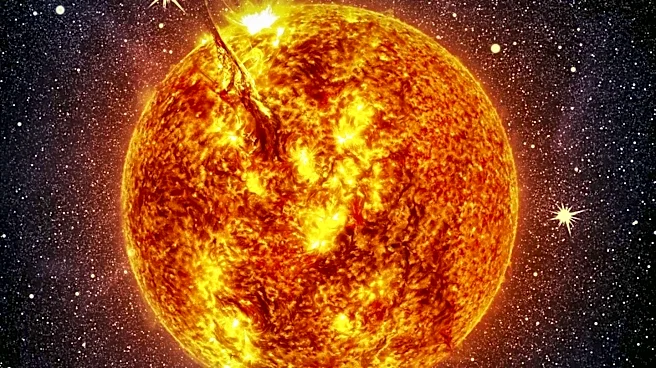
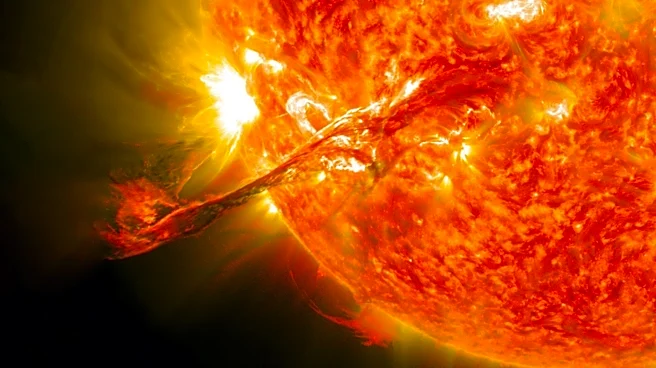
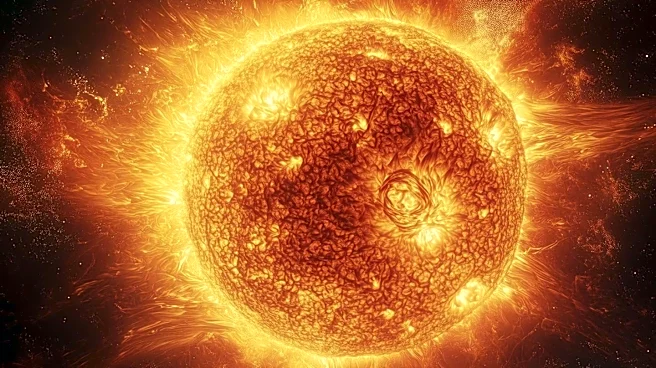
A powerful solar flare that erupted recently is expected to create a dazzling display of the Northern Lights across parts of the northern United States and Upper Midwest. The flare, which peaked at 4:50 p.m. EDT, released a burst of X-rays that reached
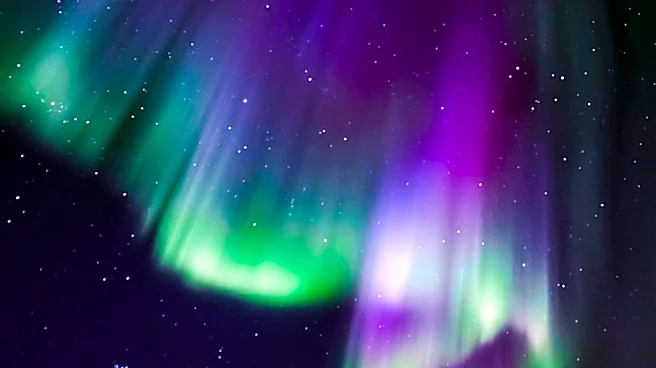
Earth in just over eight minutes, causing radio blackouts across sunlit areas. This event also produced a coronal mass ejection (CME), a massive cloud of magnetized solar plasma, which can interact with Earth's magnetic field to produce bright auroras. The National Oceanic and Atmospheric Administration (NOAA) forecasts that the Northern Lights will be visible on July 2 and July 3, with the best viewing opportunities in states such as Washington, Idaho, Montana, North Dakota, South Dakota, northern Minnesota, northern Wisconsin, northern Michigan, and Alaska.
Why It's Important?
The visibility of the Northern Lights in the U.S. is a rare and spectacular event, drawing interest from both the public and scientific communities. This occurrence highlights the dynamic nature of solar activity and its direct impact on Earth, particularly in terms of communication disruptions. The event underscores the importance of monitoring solar activity to mitigate potential impacts on technology and infrastructure. For residents in the affected areas, this provides a unique opportunity to witness a natural phenomenon that is typically confined to higher latitudes.
What's Next?
As the solar storm progresses, NOAA will continue to monitor the situation and provide updates on the potential for further geomagnetic activity. Residents in the affected areas are advised to find dark locations away from city lights to maximize their chances of viewing the auroras. The best time for viewing is expected to be between 10 p.m. and 2 a.m. If skies are clear, the auroras could be visible farther south than usual, offering a rare opportunity for many to experience this natural light show.