




What's Happening?
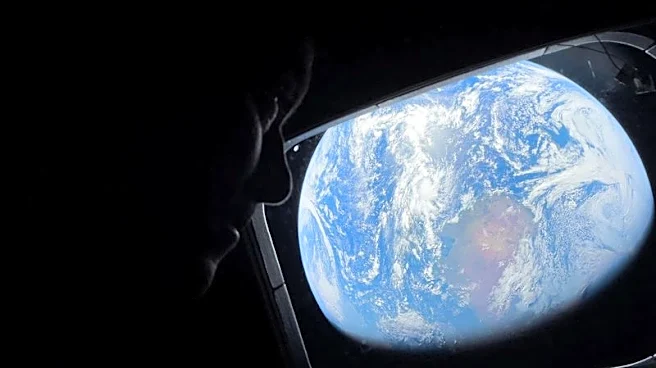
NASA successfully launched the Artemis II mission from Launch Complex 39B at Kennedy Space Center in Florida. The mission, which took place on April 1, 2026, involves a 10-day journey around the Moon and back. The crew aboard the Orion spacecraft includes
NASA astronauts Reid Wiseman, Victor Glover, Christina Koch, and Canadian Space Agency astronaut Jeremy Hansen. This mission marks a significant step in NASA's Artemis program, aiming to return humans to the Moon and eventually pave the way for future Mars exploration. The launch was captured by video editor Jeff Seibert, showcasing the event's significance and the technological prowess involved.
Why It's Important?
The Artemis II mission is crucial for NASA's long-term goals of lunar exploration and establishing a sustainable human presence on the Moon. It serves as a precursor to Artemis III, which aims to land astronauts on the lunar surface. The success of Artemis II will provide valuable data and experience for future missions, including the challenges of deep space travel and the operation of the Orion spacecraft. This mission also strengthens international collaboration, as evidenced by the inclusion of a Canadian astronaut, highlighting the global interest and cooperation in space exploration.
What's Next?
Following the successful completion of Artemis II, NASA will focus on the Artemis III mission, which aims to land astronauts on the Moon. Preparations will include refining technologies and strategies based on the data collected during Artemis II. The mission's outcomes will influence future lunar missions and the broader Artemis program, including potential partnerships with international space agencies and private companies. The insights gained will also contribute to NASA's long-term goal of human exploration of Mars.
Beyond the Headlines
The Artemis II mission represents a significant milestone in human space exploration, emphasizing the importance of international collaboration and technological innovation. It also highlights the growing interest in space exploration as a means of scientific discovery and economic opportunity. The mission's success could inspire future generations to pursue careers in STEM fields, contributing to advancements in technology and exploration.