
What's Happening?
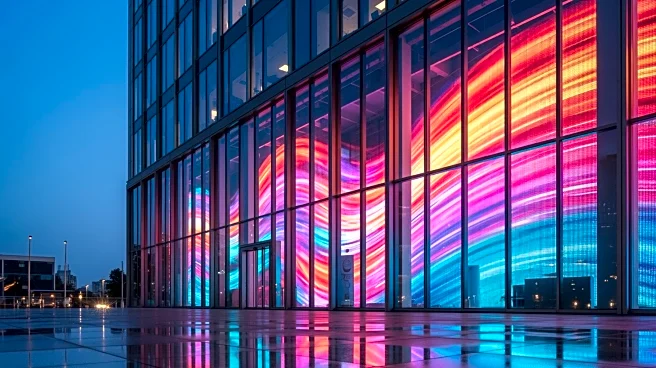
The former Macy's store in Downtown Brooklyn has been transformed into an interactive light installation titled 'In Every Transition, A Pattern.' This installation, unveiled by the Downtown Brooklyn Partnership
and the city's Department of Small Business Services, features rhythmic patterns and kaleidoscopic displays that respond to the sounds of Fulton Street. Designed by Masary Studios, the installation uses audio recordings from the neighborhood to control the lighting patterns, creating a dynamic visual experience. The installation is part of a broader initiative funded by the Public Realm Grant program, aimed at activating commercial corridors and enhancing nighttime safety. The Macy's store, which closed in January 2025 as part of a nationwide strategy to shutter underperforming locations, now serves as a canvas for this artistic endeavor.
Why It's Important?
This transformation of the shuttered Macy's store into a light installation is significant for several reasons. It represents a creative approach to revitalizing urban spaces and supporting local commerce. By activating the commercial corridor with art, the project aims to make the area feel economically active and safer, attracting more visitors and benefiting nearby businesses. The initiative also highlights the role of public art in reconnecting communities and nurturing innovation in public spaces. As Macy's continues to close stores nationwide, projects like this offer a way to repurpose and breathe new life into vacant properties, contributing to urban renewal and cultural enrichment.
What's Next?
The installation will be on view through March 16, providing an opportunity for the community to engage with the artwork and explore nearby businesses. The success of this project could inspire similar initiatives in other neighborhoods, encouraging the use of art to enhance public spaces and support local economies. Stakeholders, including community organizations and local government, may continue to explore ways to leverage public art for urban revitalization, potentially leading to more collaborations and funding opportunities in the future.