







What's Happening?
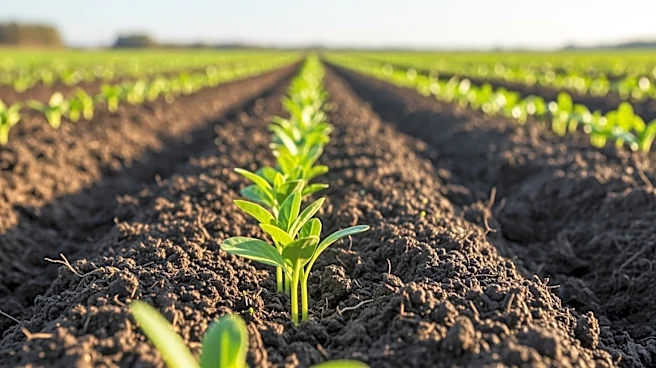
India has set a significant goal to achieve universal insurance coverage for the agriculture and allied sectors by 2047, marking the centenary of its independence. This initiative aims to protect farmers, herders, fishers, and rural entrepreneurs from
natural calamities and climate volatility. The plan is not only about mitigating losses but also about investing in stability, innovation, and sustainable rural growth. The agriculture sector, which employs nearly half of India's workforce, faces increasing threats from erratic weather patterns, including monsoons, rising temperatures, and extreme events that affect yields and incomes. To address these challenges, India is considering a shift from traditional indemnity-based insurance schemes to parametric insurance. This new model triggers payouts based on predefined parameters like rainfall levels or temperature thresholds, offering speed, transparency, and trust.
Why It's Important?
The move towards universal insurance in agriculture is crucial for India's economic stability and rural development. As climate change continues to pose significant risks, a robust insurance mechanism can enhance productivity, facilitate credit flow, and boost confidence among millions of individuals whose livelihoods depend on agriculture. The adoption of parametric insurance could close existing protection gaps and provide a scalable solution for India's diverse climatic conditions. This shift is also aligned with global trends, as the parametric insurance market is expected to grow significantly, reaching USD 70 billion by 2037. By adopting these innovative insurance models, India can better manage climate risks and support its rural economy.
What's Next?
India's journey towards universal insurance coverage in agriculture will require collaboration with governments, multilateral development banks, and reinsurers to design effective parametric insurance products. These products must be tailored to respond to specific climate-related events like cyclones, droughts, and floods. Additionally, the country will need to address challenges related to basis risk and ensure that the insurance schemes are accessible and beneficial to all stakeholders. As India progresses towards its 2047 goal, continuous evaluation and adaptation of insurance models will be essential to meet the evolving needs of the agriculture sector.
Beyond the Headlines
The shift to parametric insurance in India could have broader implications beyond agriculture. By providing quick liquidity for non-damage business interruptions, such as supply-chain disruptions or public emergencies, these insurance models could enhance resilience across various sectors. Furthermore, India's approach could serve as a model for other countries facing similar climate challenges, promoting global innovation in risk management and insurance.