


What's Happening?
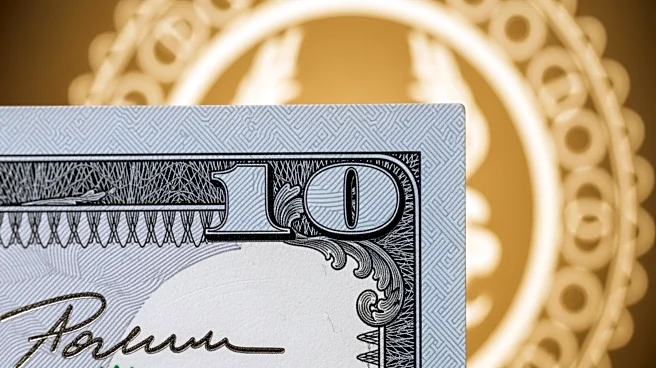
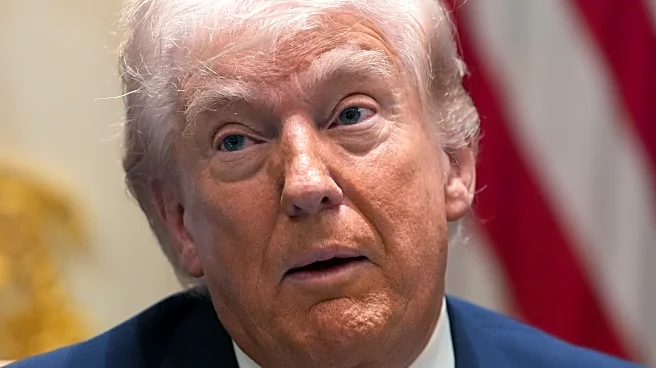
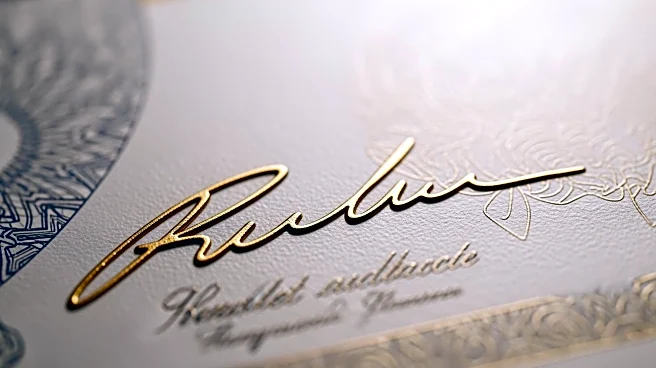
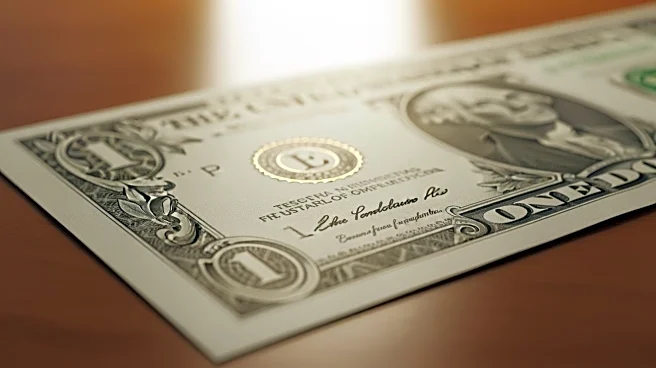
The US Treasury Department has announced plans to add President Donald Trump's signature to all US dollar bills, a first for a sitting president. This change will replace the traditional placement of the US treasurer's name, which has been a staple on the currency
for over a century. Treasury Secretary Scott Bessent stated that this move aligns with the administration's goals of showcasing economic growth and fiscal stability. The first $100 bills featuring the new signature are expected to be printed in June, with other denominations to follow. This initiative is part of a broader effort by the Trump administration to imprint the president's name on various federal projects and institutions.
Why It's Important?
The decision to feature President Trump's signature on US currency is significant as it symbolizes a shift in how presidential influence is manifested in national symbols. This move could have implications for the perception of US currency both domestically and internationally, potentially affecting its symbolic value. The initiative is part of a larger trend under the Trump administration to rename and rebrand federal institutions and projects, which has sparked both support and controversy. The changes reflect an effort to cement President Trump's legacy in American history, but they also raise questions about the politicization of national symbols and institutions.
What's Next?
The introduction of the new currency design is likely to prompt reactions from various stakeholders, including political leaders, economists, and the public. Legal challenges may arise, particularly from those opposed to the politicization of national symbols. The broader implications of this decision will unfold as the new bills enter circulation and as other rebranding efforts by the administration continue. Observers will be watching to see how these changes impact public opinion and the administration's legacy.