



What's Happening?
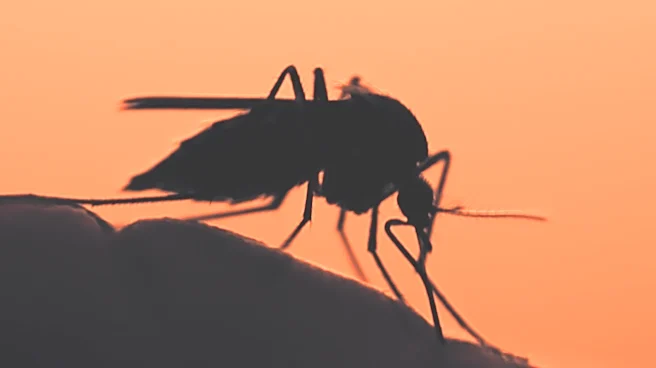
Southern California experienced its most severe mosquito season in a decade, with a significant surge in West Nile virus cases. As of November 6, the virus has sickened 528 people and caused 32 deaths in California, with Los Angeles County reporting over
half of the human cases. This increase is attributed to a warm, wet summer and fall, which created ideal conditions for mosquito breeding and virus replication. Research from UC Berkeley indicates a critical temperature threshold: West Nile virus transmission significantly increases when average temperatures rise above 73 degrees Fahrenheit. Coastal Los Angeles, with summer averages hovering around 70 degrees, is particularly vulnerable to slight temperature increases. Extreme weather events, including both heavy rainfall and drought, are contributing to more frequent outbreaks. For instance, a warm storm in September flushed larvicides from storm drains, leading to a surge in mosquito populations. Experts are concerned that the forecast for a strong El Niño winter could exacerbate the situation next year, as lingering floodwaters combined with rising spring temperatures could lead to a mosquito boom.
Why It's Important?
The escalating threat of West Nile virus in Southern California highlights the direct public health consequences of climate change and extreme weather patterns. The increased incidence of vector-borne diseases places a significant burden on healthcare systems and public health resources. The economic impact extends to vector control districts, which are already stretched thin by new invasive mosquito species and longer mosquito seasons. These districts rely on local property taxes, and their budgets are often insufficient to cover the expanding challenges. The unpredictability of outbreaks, influenced by complex interactions between birds, mosquitoes, and weather, makes disease management and prevention more difficult. Furthermore, the lack of a human vaccine for West Nile virus means that communities remain reliant on prevention methods like repellents and mosquito control efforts, which have not been fully effective in reducing cases and deaths. This situation underscores the need for increased investment in public health infrastructure, research for vaccines and treatments, and community engagement in preventative measures.
What's Next?
Public health and vector control officials are bracing for a potentially worse mosquito season next year due to the strong El Niño forecast, which predicts heavy rain for Southern California. If floodwaters persist into spring as temperatures rise, mosquito populations could surge. Vector control districts face ongoing challenges with limited funding and the emergence of invasive mosquito species like Aedes aegypti, which can spread other diseases such as dengue and Zika. These districts are exploring new strategies, including the release of sterile male Aedes mosquitoes, but these efforts divert resources from combating West Nile-carrying Culex mosquitoes. There is a recognized need for a West Nile virus vaccine, with the Centers for Disease Control and Prevention (CDC) exploring ways to encourage its development, along with new treatments and diagnostic tests. However, the unpredictable nature of outbreaks complicates the large-scale clinical studies required for vaccine development. Community participation in preventing mosquito breeding is also crucial, as vector control efforts cannot cover every potential breeding site.
Beyond the Headlines
The situation in Southern California reflects a broader national and global trend where climate change is altering the epidemiology of infectious diseases. The increased frequency and intensity of extreme weather events create novel challenges for public health, pushing existing control mechanisms to their limits. This scenario also exposes vulnerabilities in local funding models for essential public health services, as vector control districts struggle to adapt to evolving environmental conditions with static budgets. The interplay between climate change, ecological shifts (like bird migration patterns), and human behavior creates a complex public health puzzle. The focus on West Nile virus also highlights the potential for other vector-borne diseases to emerge or re-emerge as climate conditions become more favorable for their vectors. This necessitates a proactive, interdisciplinary approach involving climate scientists, public health experts, urban planners, and policymakers to develop resilient strategies for disease prevention and control in a changing climate.