
What's Happening?
South Korea's Trade Minister Yeo Han-koo visited Washington to address U.S. concerns over alleged discrimination against Coupang, a U.S.-listed e-commerce giant. The visit aimed to clarify South Korea's digital
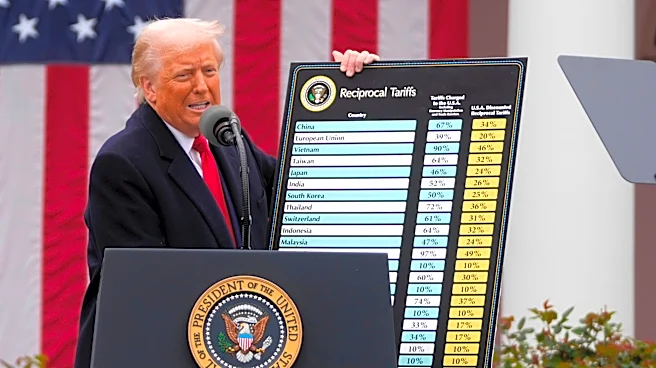
laws and policies, emphasizing their non-discriminatory nature. This comes amid a Section 301 investigation by the U.S. into potential trade violations. The discussions also focused on maintaining balanced trade agreements and preventing tariff issues from affecting broader economic relations. Despite efforts to ease tensions, the U.S. imposed a new 12.5% forced-labor tariff under the Trade Act.
Why It's Important?
The trade tensions between the U.S. and South Korea highlight the complexities of international trade relations, especially in the digital economy. The outcome of these discussions could impact bilateral trade agreements and influence future policies on digital trade and e-commerce. The situation underscores the importance of maintaining open and transparent trade practices to avoid conflicts that could disrupt economic partnerships. The imposition of new tariffs could affect South Korean exports, impacting industries and economic growth.
What's Next?
South Korea is likely to continue diplomatic efforts to resolve the trade dispute, potentially involving further negotiations with U.S. trade officials. The outcome of the Section 301 investigation will be crucial in determining future trade relations between the two countries. Both nations may seek to strengthen cooperation in strategic industries, such as semiconductors and energy, to mitigate the impact of trade tensions. The situation will be closely watched by businesses and policymakers, as it could set precedents for handling similar disputes in the future.