




What's Happening?
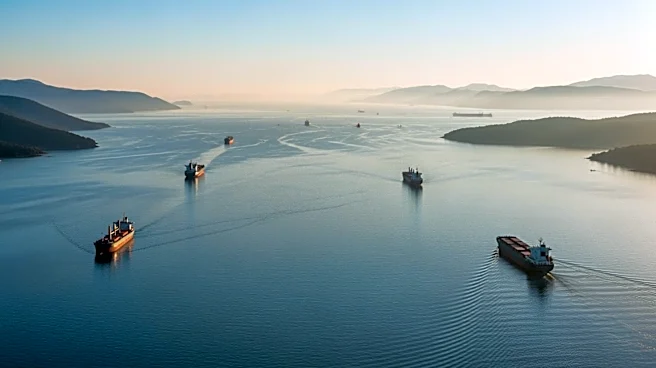
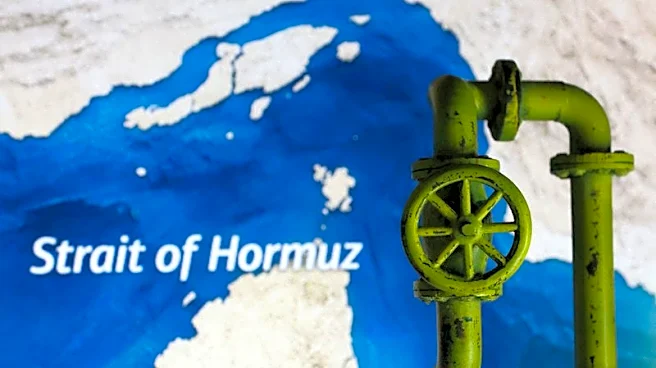
JP Morgan has warned that oil prices could reach $120 per barrel if the current stalemate in the Strait of Hormuz continues into July. Despite a recent ceasefire, vessel traffic through this critical oil chokepoint remains heavily restricted, controlled
by Iran's Islamic Revolutionary Guard Corps. The market is hopeful that upcoming Iran-U.S. negotiations might ease the situation, but significant risks remain. Analysts expect a gradual restoration of normal oil flows, with full recovery potentially delayed until July, which could drive prices up by $15 to $20 per barrel. Currently, oil prices are trading between $95 and $97 per barrel.
Why It's Important?
The Strait of Hormuz is a vital artery for global oil supply, and prolonged disruptions could have significant economic repercussions. A spike in oil prices would impact various sectors, from transportation to manufacturing, increasing costs for businesses and consumers. The U.S. economy, heavily reliant on stable energy prices, could face inflationary pressures, affecting economic growth and consumer spending. Additionally, geopolitical tensions in the region could escalate, influencing U.S. foreign policy and military strategy. The situation underscores the interconnectedness of global energy markets and the potential vulnerabilities in supply chains.
What's Next?
The outcome of the Iran-U.S. negotiations will be crucial in determining the future of oil flows through the Strait of Hormuz. A resolution could stabilize markets and prevent further price hikes. However, if tensions persist, the U.S. and its allies may need to explore alternative energy sources or increase domestic production to mitigate supply risks. Policymakers and industry leaders will be closely monitoring developments, as prolonged disruptions could necessitate strategic adjustments in energy policy and international relations.