



What's Happening?
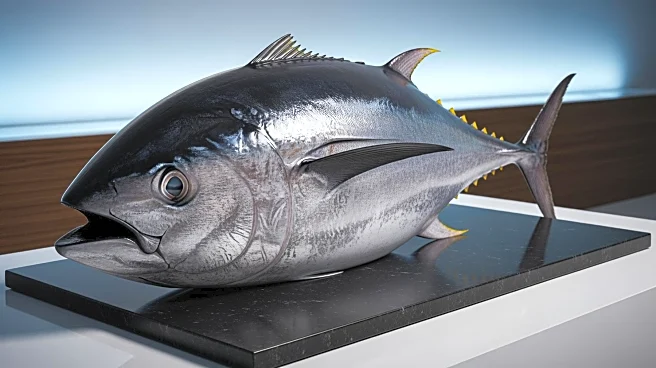
A bluefin tuna weighing 243 kilograms (535 pounds) was sold for a record 510 million yen ($3.2 million) at the first auction of 2026 at Tokyo's Toyosu fish market. The top bidder was Kiyomura Corp., owned by Kiyoshi Kimura, who runs the Sushi Zanmai chain.
This sale broke the previous record of 334 million yen ($2.1 million) set in 2019. The auction, held at dawn, featured numerous tuna with their tails cut off to allow bidders to inspect the meat's quality. The tuna, caught off the coast of Oma in northern Japan, is renowned for its high quality, costing 2.1 million yen ($13,360) per kilogram. Kimura expressed his hope to pay less but noted the price escalated quickly. The auction is a traditional event, with prices for Oma tuna particularly high during the New Year auction.
Why It's Important?
The record-breaking sale of the bluefin tuna highlights the ongoing demand and cultural significance of tuna in Japan, particularly for sushi and sashimi. Despite previous concerns over the Pacific bluefin tuna's status as a threatened species due to overfishing and climate change, conservation efforts have led to a recovery in its stock. This auction underscores the economic and cultural value placed on high-quality tuna, which remains a luxury item in Japan. The high price paid for the tuna reflects both its rarity and the symbolic importance of securing a prized catch at the New Year auction, which is seen as a good luck gesture for the year ahead.
What's Next?
The sale of such a high-priced tuna may influence future auctions, potentially driving up prices as bidders seek to secure similarly prestigious catches. The continued recovery of bluefin tuna stocks will be crucial in maintaining the balance between demand and conservation. Stakeholders, including environmental groups and the fishing industry, will likely monitor the impact of such high-profile sales on tuna populations and market dynamics. Additionally, the auction's outcome may prompt discussions on sustainable fishing practices and the role of luxury seafood in global markets.
Beyond the Headlines
The auction of the bluefin tuna at such a high price raises questions about the sustainability of luxury seafood markets and the ethical implications of consuming threatened species. While conservation efforts have improved the bluefin tuna's status, the high demand and prices could incentivize overfishing if not carefully managed. This event also highlights the cultural importance of seafood in Japan, where traditional practices and modern market forces intersect. The balance between cultural heritage and environmental responsibility will continue to be a topic of discussion as global seafood markets evolve.