
What's Happening?
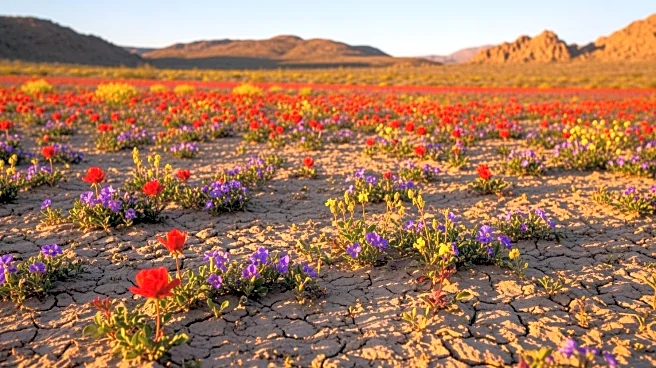
Death Valley National Park is experiencing its most spectacular superbloom in a decade, transforming the typically barren desert landscape into a vibrant display of pink, purple, and yellow wildflowers. This rare natural event is attributed to unusually
high rainfall during the fall and early winter, with the park receiving more than its annual average of two inches of rain in just a few months. The superbloom is a result of specific weather conditions, including multiple days of gentle rain and mild temperatures, which are necessary for the wildflower seeds, known as ephemerals, to germinate. These seeds can remain dormant in the soil for years, waiting for the right conditions to bloom.
Why It's Important?
The superbloom in Death Valley is significant as it highlights the delicate balance of environmental conditions required for such natural phenomena. It draws attention to the impact of climate patterns on ecosystems, showcasing how even slight variations in weather can lead to dramatic changes in the landscape. This event not only attracts tourists and nature enthusiasts, boosting local tourism, but also serves as a reminder of the importance of preserving natural habitats. The superbloom underscores the resilience of desert ecosystems and their ability to thrive under specific conditions, offering insights into biodiversity and conservation efforts.
What's Next?
The current superbloom is expected to last until mid- to late March at lower elevations, with higher elevations seeing blooms from April to June, depending on weather conditions. Visitors are encouraged to experience the superbloom while it lasts, as such events are rare and unpredictable. The National Park Service may continue to monitor the impact of increased visitor traffic on the park's ecosystem and infrastructure. Future superblooms will depend on similar weather patterns, emphasizing the need for ongoing research into climate variability and its effects on natural landscapes.