







What's Happening?
Cole Tomas Allen, a former Caltech graduate, has been charged with attempting to assassinate President Trump and other top officials in a recent attack at the Washington Hilton. Allen, who previously led a quiet life as a tutor and mechanical engineer,
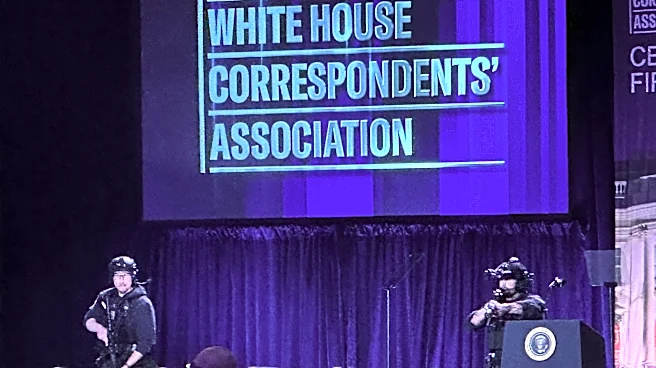
is accused of firing a shotgun during the White House Correspondents' Dinner. His background includes a strong academic record and involvement in various extracurricular activities, such as the Caltech Christian Fellowship and the fencing team. Despite his seemingly unassuming nature, Allen's social media history reveals a growing discontent with U.S. policies, particularly regarding Ukraine and Iran.
Why It's Important?
This case highlights the potential for individuals with seemingly stable backgrounds to become involved in violent acts. Allen's transformation from a respected academic and professional to an accused gunman raises questions about the factors that can lead to such drastic changes in behavior. The incident underscores the importance of monitoring and addressing radicalization, especially in the context of political and social unrest. For law enforcement and policymakers, understanding the motivations and pathways to violence is crucial in preventing future attacks and ensuring public safety.
What's Next?
As the legal proceedings against Allen unfold, there will likely be increased scrutiny on his past activities and social media presence. The case may prompt discussions on the role of online platforms in facilitating radicalization and the responsibilities of tech companies in monitoring extremist content. Additionally, the incident could influence security protocols at high-profile events, leading to more stringent measures to prevent similar attacks. The outcome of Allen's trial will be closely watched, as it may set precedents for handling cases involving politically motivated violence.