


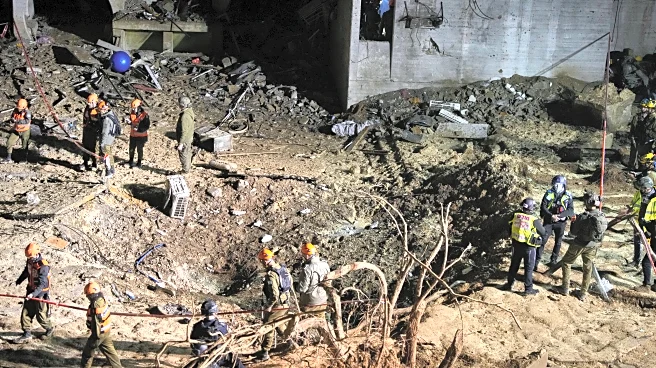
What's Happening?
Shell CEO Wael Sawan has warned that Europe could face energy shortages by April due to the ongoing conflict in the Middle East. The war has damaged key energy facilities and nearly halted shipping through the Strait of Hormuz, a vital route for global
oil and LNG flows. The disruption has already affected jet fuel supplies, with diesel and gasoline expected to follow. Germany's Economy Minister Katherina Reiche has also cautioned about potential energy scarcity if the conflict persists. Shell is working with governments to address the crisis, focusing on storage and purchasing strategies.
Why It's Important?
The potential energy shortages highlight the vulnerability of global supply chains to geopolitical conflicts. Europe's reliance on Middle Eastern energy supplies underscores the need for diversified energy sources and improved energy security measures. The situation could lead to increased energy prices and economic challenges for European countries, affecting industries and consumers. It also emphasizes the importance of international cooperation to ensure stable energy supplies and mitigate the impact of regional conflicts on global markets.
What's Next?
European nations may intensify efforts to secure alternative energy sources and enhance energy efficiency to mitigate potential shortages. The situation could prompt policy discussions on energy diversification and the development of renewable energy infrastructure. Additionally, diplomatic efforts to resolve the Middle East conflict and stabilize energy supplies will be crucial. Stakeholders will likely monitor developments closely to assess the impact on energy markets and economic stability.