






What's Happening?
Congresswoman Bonnie Watson Coleman (NJ-12) has announced the allocation of $715,000 in federal funding to the Delaware River Basin Commission (DRBC). This funding is designated to support the DRBC's ongoing efforts in protecting water resources across
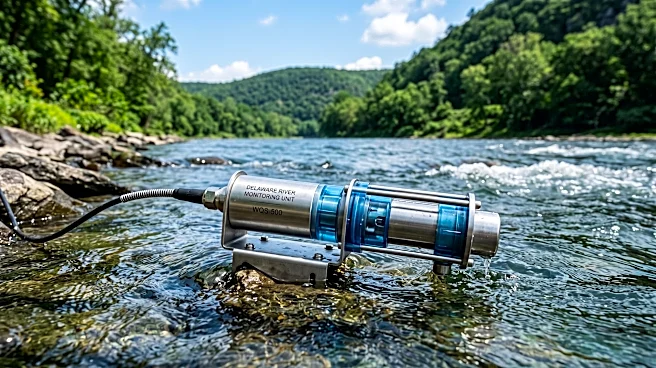
the Delaware River Basin. The announcement was made with key stakeholders present, including DRBC Executive Director Kristen Bowman Kavanagh, DRBC Director of External Affairs Beth Brown, New Jersey State Geologist Steve Domber, and Ewing Mayor Bert Steinmann, alongside other local officials and community partners. The secured funds will fulfill the federal government's signatory funding share for the DRBC, enabling the commission to continue its vital scientific research, water quality monitoring, engineering, and regulatory programs. These programs are crucial for maintaining safe water supplies and assisting communities in preparing for the impacts of climate change, such as flooding and drought. Congresswoman Watson Coleman emphasized her commitment as New Jersey's sole Appropriator to securing these funds, highlighting the daily reliance of millions on this resource and the importance of environmental justice in water protection efforts.
Why It's Important?
This federal funding is critical for the sustained health and management of the Delaware River Basin, a vital resource that spans 13,539 square miles across parts of Delaware, New Jersey, New York, and Pennsylvania. The basin provides water to over 14.2 million people, including approximately 2 million New Jersey residents. The DRBC, established in 1961, plays a unique role in coordinating water resource management among the federal government and the four basin states, covering aspects like water quality protection, water supply planning, flood loss reduction, drought management, and conservation. The funding ensures the continuation of scientific and regulatory work essential for long-term water resource protection, directly impacting public health, economic stability, and environmental sustainability across the region. It also supports water equity by helping vulnerable communities prepare for changing environmental conditions and ensuring equitable access to clean, reliable water, particularly for those disproportionately affected by environmental burdens.
What's Next?
The secured federal funding will allow the Delaware River Basin Commission to proceed with its planned scientific research, water quality monitoring, engineering projects, and regulatory programs without interruption. This continued support will enable the DRBC to further its work in preparing communities for the challenges posed by climate change, such as increased instances of flooding and drought. The emphasis on environmental justice within the funding allocation suggests that future DRBC initiatives will likely prioritize communities that have historically faced a disproportionate share of environmental burdens, aiming to ensure that all communities within the basin benefit from investments in water protection. Congresswoman Watson Coleman's ongoing championship of federal funding for the DRBC indicates a continued focus on regional cooperation for water resource protection, suggesting that similar funding efforts may be pursued in the future to maintain the basin's health and resilience.
Beyond the Headlines
The consistent federal funding for the Delaware River Basin Commission underscores a broader recognition of the interconnectedness of regional water resources and the necessity of multi-state and federal cooperation in environmental management. This commitment highlights the long-term implications of climate change on water availability and quality, pushing for proactive measures rather than reactive responses. The focus on environmental justice within the funding allocation also signals a growing imperative to address historical inequities in environmental policy, ensuring that the benefits of clean water and sustainable management are distributed equitably across all communities, especially those that have been marginalized. This approach could serve as a model for other interstate river basin commissions, promoting a more holistic and equitable framework for water resource governance in the face of evolving environmental challenges and demographic shifts.