







What's Happening?
The U.S. power grid is experiencing significant congestion, leading to increased electricity costs and delays in new generation projects. PJM Interconnection, the largest U.S. power market, reported $777.8 million in congestion costs in June, following
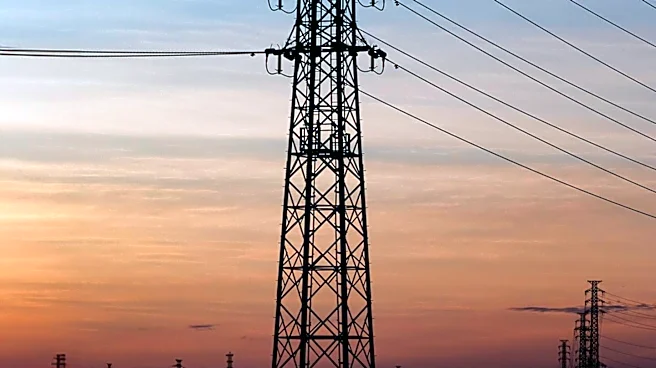
a record $1 billion in May. This congestion is driven by the growing demand for electricity, particularly from data centers, domestic manufacturing, and electrification initiatives. The inability to dispatch the cheapest available electricity due to overloaded transmission lines forces reliance on more expensive local generators, increasing costs for consumers.
Why It's Important?
The rising congestion costs on the U.S. power grid act as a barrier to economic growth, functioning like a tax on electricity consumers and producers. As demand for electricity continues to grow, the need for expanded transmission infrastructure becomes more urgent. The current bottlenecks not only increase costs but also hinder the integration of new renewable energy projects, which are often located far from major demand centers. This situation underscores the importance of investing in transmission infrastructure to support the country's energy transition goals and ensure reliable and affordable electricity supply.
What's Next?
Addressing the congestion on the power grid will require significant investment in transmission infrastructure. Technologies that enhance the capacity of existing lines, such as Dynamic Line Rating, offer potential solutions to alleviate congestion. However, the development of new high-voltage power lines faces challenges such as local opposition and permitting disputes. Policymakers and industry stakeholders must collaborate to overcome these obstacles and accelerate the expansion of the grid to meet future demand and support economic growth.