


What's Happening?
President Donald Trump announced that Iran's president has requested a ceasefire amid ongoing conflict. However, the U.S. will only consider this offer if the Strait of Hormuz is open, free, and clear. This statement was made on Truth Social, just hours
before Trump was scheduled to deliver an important update on Iran in a national address. The conflict began on February 28, when the U.S. and Israel launched strikes on Iran, leading to significant economic disruptions and fluctuations in global energy prices. The Strait of Hormuz, a critical passage for global oil shipments, remains a contentious point in the conflict. Despite claims of significant progress in achieving U.S. objectives, the strait's blockage continues to pose challenges.
Why It's Important?
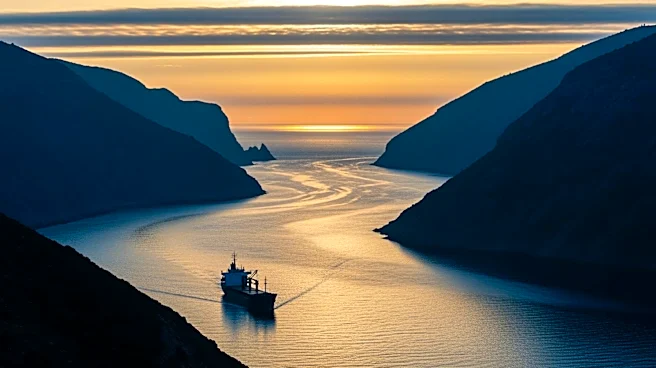
The Strait of Hormuz is a vital maritime chokepoint through which a significant portion of the world's oil supply is transported. Its closure or obstruction can lead to substantial disruptions in global oil markets, affecting energy prices worldwide. The U.S. stance on requiring the strait to be open before considering a ceasefire highlights the strategic importance of this waterway. The ongoing conflict and its resolution could have far-reaching implications for international relations, energy security, and economic stability. Stakeholders in the energy sector, as well as geopolitical analysts, are closely monitoring the situation for potential impacts on oil supply and global market stability.
What's Next?
President Trump's upcoming address is expected to provide further insights into the U.S. strategy and potential diplomatic or military actions. The international community, including allies and adversaries, will be watching closely for any shifts in U.S. policy or military posture. The response from Iran and other regional players will also be critical in determining the next steps in this conflict. Potential diplomatic engagements or escalations could significantly alter the current dynamics, impacting not only regional stability but also global economic conditions.