




What's Happening?
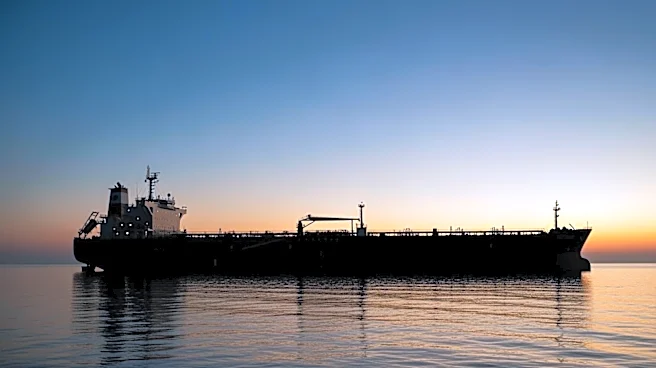
A recent shipment of oil to the Philippines, initially identified as Iranian, has been confirmed to originate from Russia, according to shiptracking firm Kpler. The Suezmax tanker Ocean Start delivered the cargo to Petron's Bataan refinery on May 17.
Kpler's revised data indicates that the oil was transferred ship-to-ship in Singaporean waters from the Suezmax ship Caruzo, which had loaded the crude at Russia's Sheskharis terminal in late March. This correction follows previous reports that the oil was sourced from Iran's Kharg Island. Another analytics firm, Vortexa, maintains that the cargo is Iranian, delivered via a transfer from the tanker Noxen. The Trump administration had previously issued a 30-day waiver on sanctions for Iranian oil purchases to stabilize prices after tensions with Iran. The Philippines, heavily reliant on Middle Eastern oil, also received a U.S. waiver to purchase Russian oil.
Why It's Important?
This development highlights the complexities and challenges in global oil trade, especially amid geopolitical tensions. The misidentification of the oil's origin underscores the difficulties in tracking and verifying oil shipments, which can have significant implications for international trade and sanctions enforcement. The U.S. waivers granted to the Philippines reflect strategic moves to manage oil supply and prices in the face of regional conflicts. The situation also illustrates the shifting dynamics in global oil markets, where countries like the Philippines must navigate between geopolitical alliances and energy needs. The reliance on waivers and the need for accurate tracking data are crucial for maintaining market stability and compliance with international sanctions.
What's Next?
The ongoing geopolitical tensions and the need for accurate tracking of oil shipments are likely to prompt further scrutiny and regulatory measures. Countries involved in oil trade may seek to enhance their tracking capabilities and compliance with international sanctions. The Philippines and other nations dependent on Middle Eastern oil might explore diversifying their energy sources to mitigate risks associated with geopolitical conflicts. Additionally, the U.S. may continue to adjust its sanctions policies to balance geopolitical interests with economic stability. The situation could lead to increased diplomatic engagements to address the complexities of global oil trade.