





What's Happening?
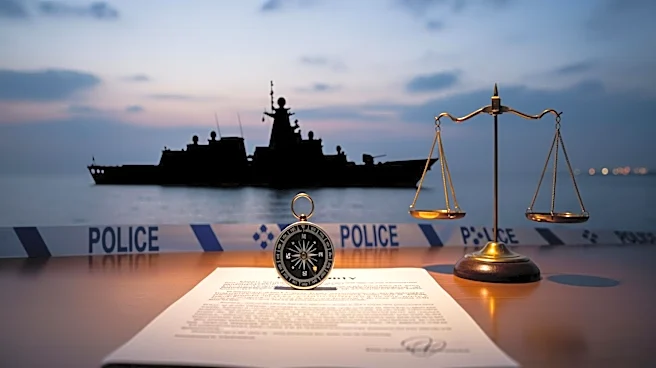
President Trump has described the U.S. naval blockade of Iran as a 'very friendly blockade,' a characterization that has sparked debate over its legality and implications. The blockade, which restricts Iran's maritime access and commerce, is considered
an act of war under international norms. Despite a ceasefire with Iran, the blockade remains in place, and the Trump administration argues that this negates the need for congressional authorization to continue military operations beyond the 60-day limit set by the War Powers Resolution. This resolution, enacted post-Vietnam, requires the president to obtain congressional approval for military actions extending beyond 60 days. As the deadline passed on May 1, Congress has yet to vote on authorizing the continued use of force, with members leaving for a recess instead.
Why It's Important?
The situation underscores a significant constitutional issue regarding the separation of powers in the U.S. government. The War Powers Resolution was designed to prevent presidents from engaging in prolonged military actions without congressional oversight. By not voting on the blockade, Congress is perceived as abdicating its responsibility, potentially setting a precedent for future executive overreach in military matters. This could weaken the legislative branch's role in war-making decisions, traditionally a check on executive power. The ongoing blockade also affects U.S.-Iran relations and could influence global perceptions of U.S. foreign policy, particularly in terms of adherence to international law and norms.
What's Next?
The continuation of the blockade without congressional authorization may lead to increased political pressure on lawmakers to act. Congress could be compelled to either authorize the blockade or demand its cessation, especially if public scrutiny intensifies. The situation may also prompt legal challenges or calls for legislative reform to reinforce the War Powers Resolution. Additionally, the blockade's impact on U.S.-Iran relations could influence diplomatic efforts and negotiations, potentially affecting broader geopolitical dynamics in the region.