



What's Happening?
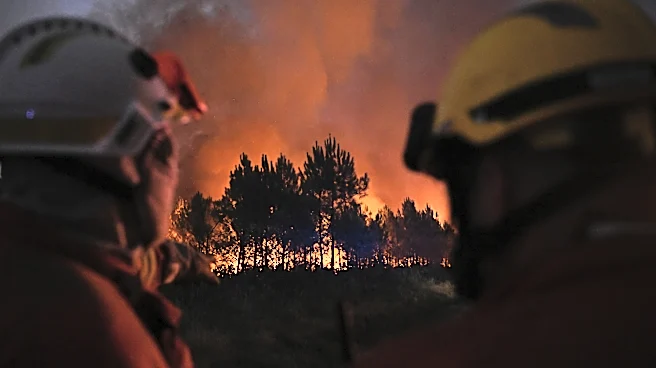
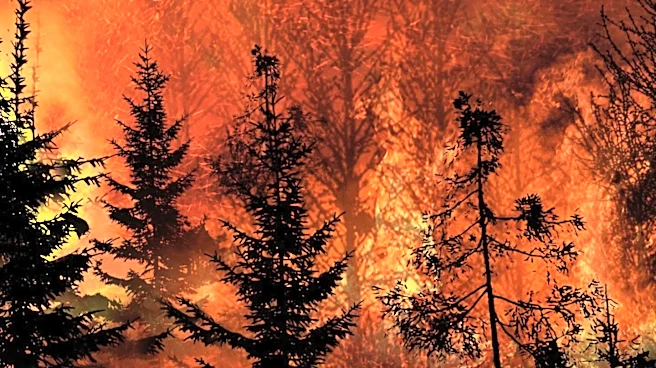
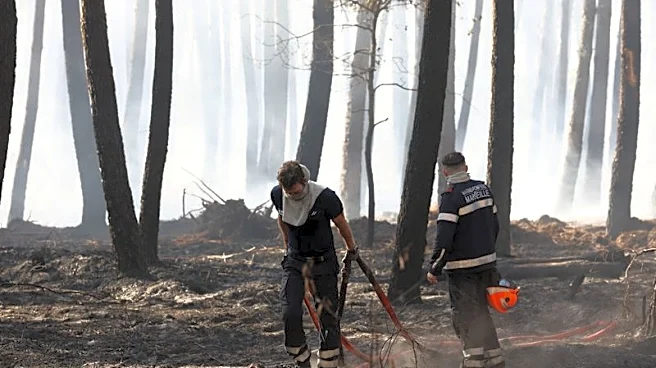
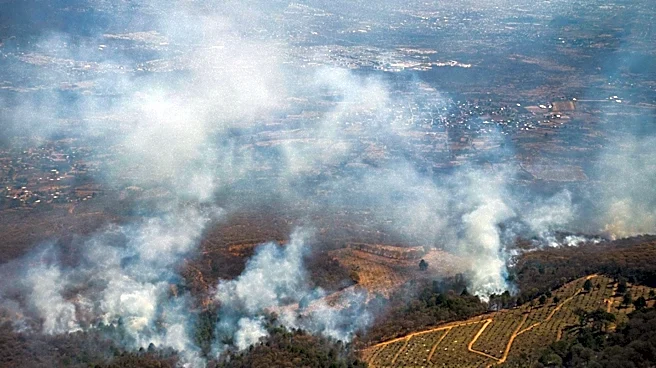
Recent wildfires in France and Spain have led to the evacuation of hundreds of thousands of people, marking one of the largest displacements in Europe since World War II. The fires, exacerbated by human-induced climate change, have been fueled by extreme
heat waves and prolonged drought conditions. According to World Weather Attribution, climate change has doubled the likelihood of fire-prone conditions in France and increased it twentyfold in central Spain. The fires have devastated rural areas reliant on farming and tourism, with significant impacts on local livelihoods. The Red Cross is actively involved in coordinating disaster response efforts, providing supplies and temporary shelter to evacuees.
Why It's Important?
The wildfires highlight the growing threat of climate change-induced natural disasters in Europe, affecting both human populations and economic activities. The displacement of over 300,000 people underscores the urgent need for effective disaster management and climate adaptation strategies. The fires have severely impacted rural economies, particularly those dependent on agriculture and tourism, leading to potential long-term economic challenges. The situation also raises concerns about the adequacy of current firefighting capacities and the need for improved landscape management to mitigate future risks.
What's Next?
With heat waves projected to continue, the risk of further wildfires remains high. Authorities are working to contain the fires and facilitate the return of evacuees. However, the ongoing drought and high temperatures pose challenges to firefighting efforts. The situation calls for increased investment in fire prevention and management strategies, as well as cross-border cooperation to enhance disaster response capabilities. The European Union may need to reassess its climate policies to address the increasing frequency and intensity of such events.
Beyond the Headlines
The wildfires in France and Spain are part of a broader pattern of climate change-induced disasters affecting Europe. The phenomenon known as 'weather whiplash,' characterized by wet winters followed by dry summers, is becoming more common, increasing wildfire risks. The fires also highlight the need for sustainable land management practices, including diversifying forest species to reduce flammability. As climate change continues to alter weather patterns, Europe must adapt its policies and infrastructure to mitigate the impacts of extreme weather events.