



What's Happening?
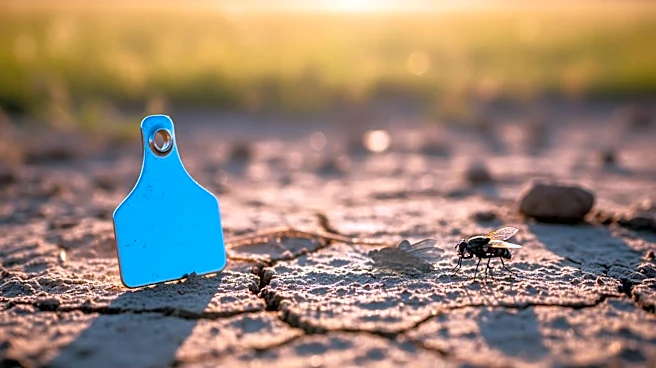
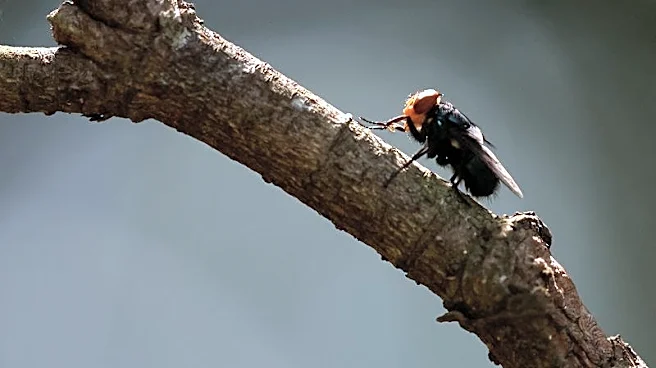
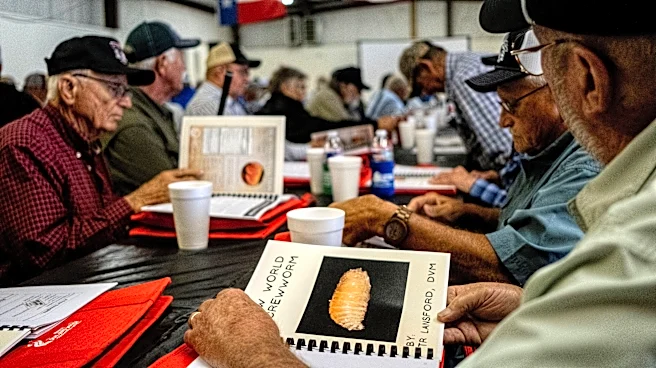
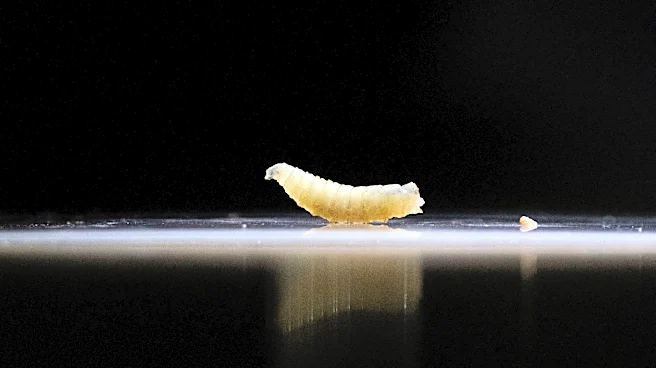
The U.S. Department of Agriculture (USDA) has confirmed the presence of the New World screwworm fly in south Texas, marking the first detection in decades. This parasite, known for its flesh-eating larvae, poses a significant threat to the cattle industry.
The case was identified in a 3-week-old calf in LaPryor, Texas, near the Mexico border. In response, Texas State Veterinarian Bud Dinges has established a 12-mile quarantine zone to prevent the movement of warm-blooded animals, including pets, without inspection. Agriculture Secretary Brooke Rollins emphasized that while the larvae threaten livestock, they do not infest food, and the infested calf is expected to recover with proper treatment. The USDA has been proactive in preventing the fly's spread, employing methods such as releasing sterile flies to mate with wild females, a strategy that previously led to the fly's eradication in the 1970s.
Why It's Important?
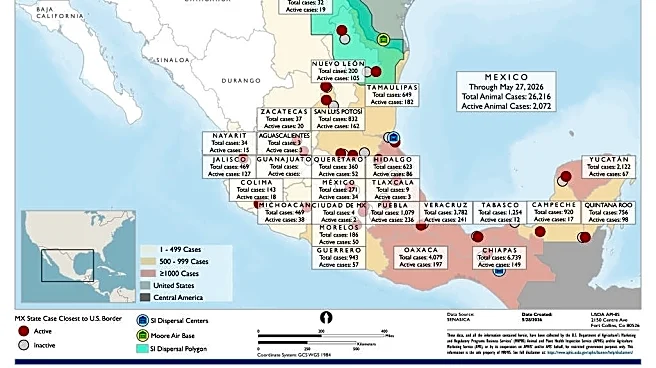
The reappearance of the screwworm fly in Texas is significant due to its potential economic impact on the U.S. cattle industry. Historically, the parasite caused substantial financial losses before its eradication, and its return could lead to similar consequences. The USDA's efforts to prevent a widespread infestation are crucial to protecting the cattle industry from potential billions in losses. The situation also highlights the importance of biosecurity measures and cross-border cooperation, as the fly's movement across Mexico has been closely monitored. The USDA's investment in facilities for breeding sterile flies and the establishment of quarantine zones are critical steps in mitigating the threat.
What's Next?
The USDA plans to continue its efforts to control the screwworm fly population by expanding its sterile fly breeding program. A new facility in southern Mexico is set to begin operations soon, and a $750 million screwworm fly factory is under construction in Texas. Additionally, the USDA has deployed thousands of fly traps along the U.S.-Mexico border and continues to test fly samples and wild animals. The agency's strategy aims to prevent the establishment of the pest in the U.S., and officials remain confident in their preparations. The situation will require ongoing monitoring and cooperation from ranchers and pet owners to respect quarantine measures.