
What's Happening?
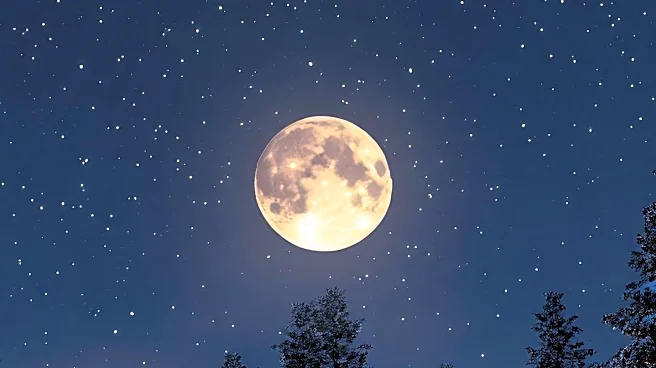
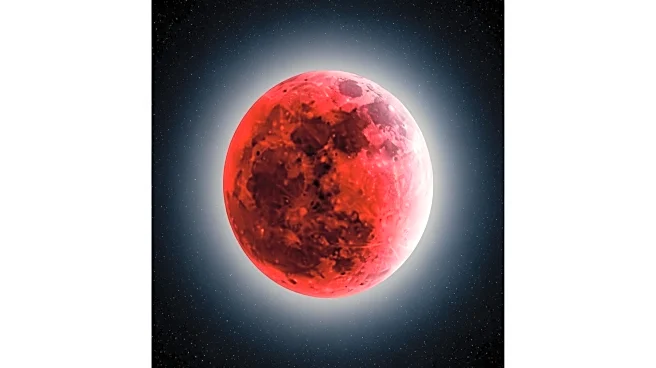
The February full moon, known as the Snow Moon, reaches its peak on February 1, 2026, at 5:09 p.m. ET. This astronomical event is characterized by the moon appearing fully illuminated from Earth's perspective, a phenomenon that occurs when the moon is directly
opposite the sun. The Snow Moon is visible shortly after sunset and remains prominent throughout the night, often taking on a golden or orange hue near the horizon. This full moon is named the Snow Moon due to the heavy snowfall typically experienced in the Northern Hemisphere during February. The moon will appear bright and round, making it an ideal time for casual sky watching and photography.
Why It's Important?
The Snow Moon provides an opportunity for people to engage with astronomy and appreciate the natural world. Its brightness can illuminate landscapes, offering a unique viewing experience that can be enjoyed without special equipment. This event also highlights the cultural significance of moon-naming traditions in North America, where the Snow Moon reflects the winter conditions prevalent in February. For photographers and stargazers, the full moon's brightness can enhance landscape photography but may wash out fainter celestial objects, making it less ideal for deep-sky observations.
What's Next?
Following the Snow Moon, the lunar cycle will transition into a dimming phase, with the third quarter moon occurring on February 9, 2026, and the new moon on February 17, 2026. The period around the new moon will offer darker skies, which are more suitable for stargazing and observing faint celestial objects. This time is particularly favorable for those interested in meteor watching or night-sky photography, provided the weather conditions are clear.