



What's Happening?
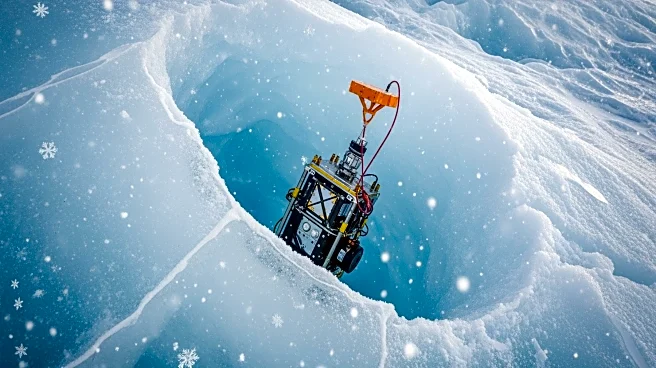
A recent study has revealed that the Prudhoe Dome, part of the Greenland Ice Sheet, completely melted around 7,000 years ago during the early Holocene when temperatures were similar to those predicted for the end of this century. Scientists drilled into
the ice to collect sediment samples, which showed that the ice had fully melted, exposing the bedrock beneath. This historical melting event is significant as it suggests that similar temperature increases could lead to substantial ice loss in the future. The Greenland Ice Sheet is currently the largest contributor to global sea level rise, and its complete melting could raise sea levels by 24 feet.
Why It's Important?
The findings from the Prudhoe Dome study underscore the potential impact of climate change on global sea levels. As temperatures rise, the risk of significant ice loss from Greenland increases, which could have catastrophic effects on coastal communities worldwide. The study provides valuable data that can help refine climate models and improve predictions of future sea level rise. Understanding past climate events is crucial for preparing for future changes and implementing effective mitigation strategies. The research highlights the urgent need for global efforts to limit temperature increases and reduce greenhouse gas emissions to prevent similar melting events.
What's Next?
Further research is needed to map the extent of ice loss during the Holocene and to understand how the Greenland Ice Sheet might respond to future warming. Additional ice core samples from other parts of Greenland could provide more insights into past climate conditions and help predict future changes. The study's findings may influence climate policy and encourage international cooperation to address climate change. Efforts to limit global warming and protect vulnerable ice sheets will be critical in preventing drastic sea level rise and its associated impacts.