


What's Happening?
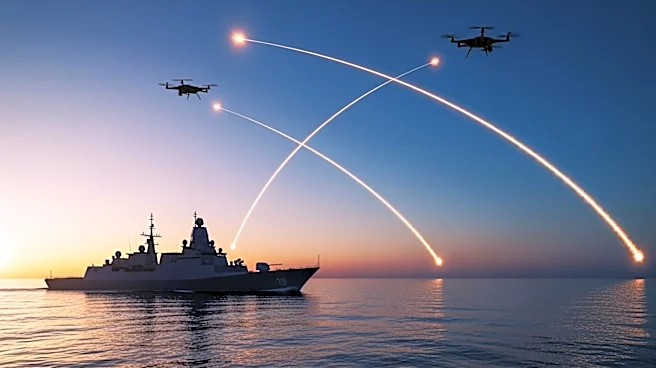
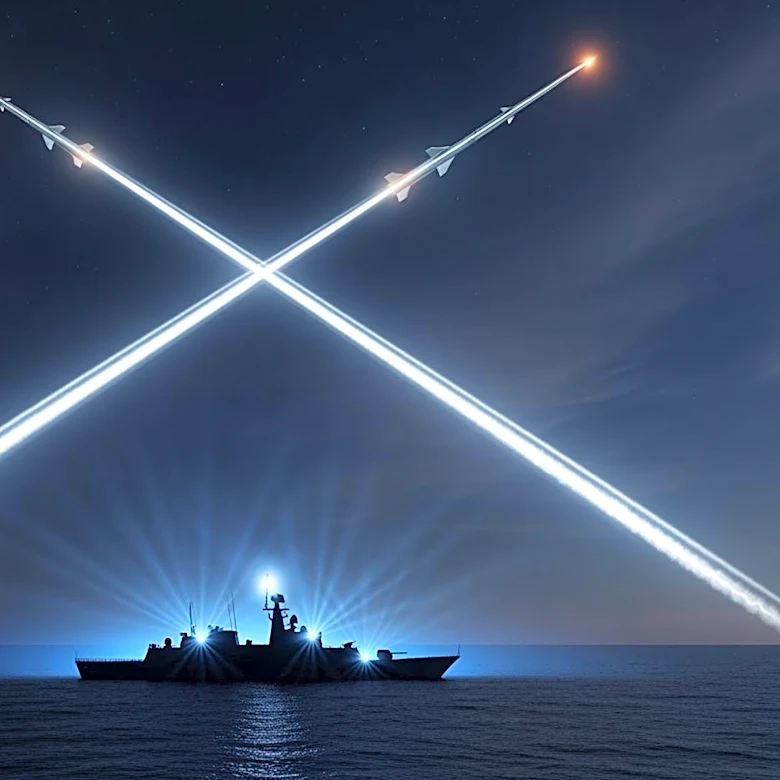
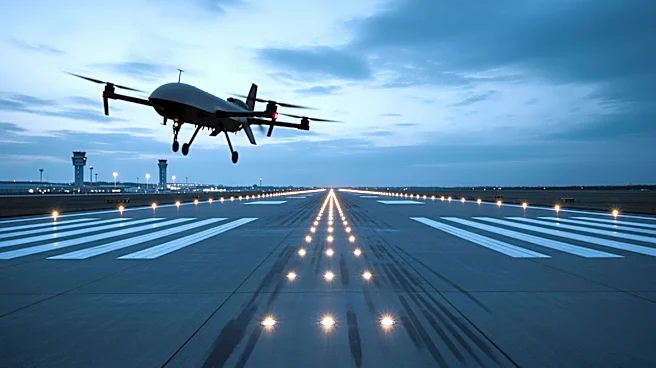
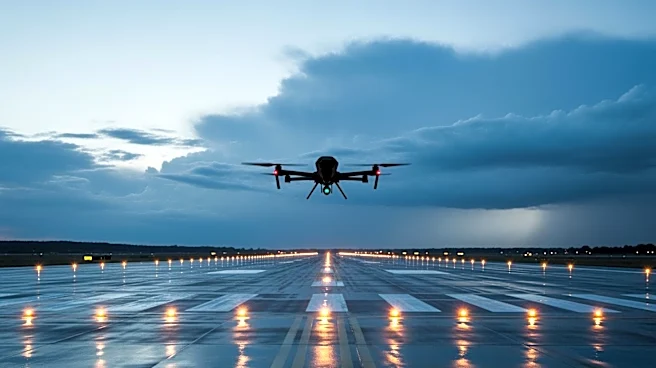
The United States and Iran have engaged in a series of military exchanges near the Strait of Hormuz, threatening the stability of a fragile ceasefire. The US military reported shooting down four Iranian drones that posed a threat to regional maritime
traffic and conducted strikes on Iranian coastal surveillance radar sites. In retaliation, Iran launched ballistic missiles and drones targeting Kuwait and Bahrain, specifically aiming at the Ali al-Salem airbase in Bahrain, which houses the US Navy's 5th Fleet. These actions have strained efforts to extend the ceasefire and have led to increased regional instability. The World Food Programme has highlighted the humanitarian impact, noting that millions are being pushed into hunger due to rising energy and food prices linked to the conflict.
Why It's Important?
The escalation between the US and Iran has significant implications for global energy markets and regional security. The Strait of Hormuz is a critical corridor for global oil and natural gas shipments, and disruptions there can lead to spikes in energy prices, affecting economies worldwide. The ongoing conflict also poses a threat to regional stability, with potential spillover effects into neighboring countries. The US is under pressure to find a resolution, as the conflict has become unpopular domestically, especially with midterm elections approaching. The situation also complicates US-Iran negotiations on extending the ceasefire and addressing Iran's nuclear program, with both sides showing little willingness to compromise.
What's Next?
Negotiations between the US and Iran are expected to continue, with both sides working to extend the ceasefire by 60 days and initiate new talks on Iran's nuclear program. However, the ongoing military exchanges and lack of compromise could hinder these efforts. The US administration, led by President Trump, is under pressure to resolve the conflict quickly, as it impacts domestic politics and global markets. The situation remains volatile, with the potential for further military actions if diplomatic solutions are not reached.
Beyond the Headlines
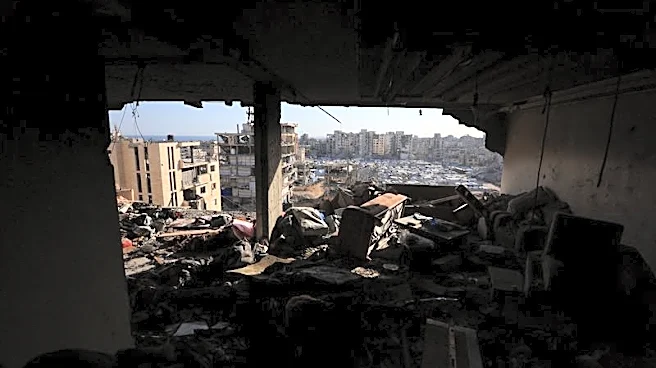
The conflict highlights the complex geopolitical dynamics in the Middle East, where multiple actors, including Iran, the US, and regional powers, have competing interests. The involvement of Iranian-backed groups like Hezbollah further complicates the situation, as they reject ceasefire agreements and continue to engage in hostilities. The humanitarian impact of the conflict is also significant, with rising food and energy prices exacerbating poverty and hunger in the region. The situation underscores the need for a comprehensive diplomatic approach that addresses the underlying causes of the conflict and involves all relevant stakeholders.